
Plantar Wart Treatment in Dickinson, TX
Plantar warts can be stubborn and painful to walk on. Professional care clears them more reliably than over-the-counter remedies.
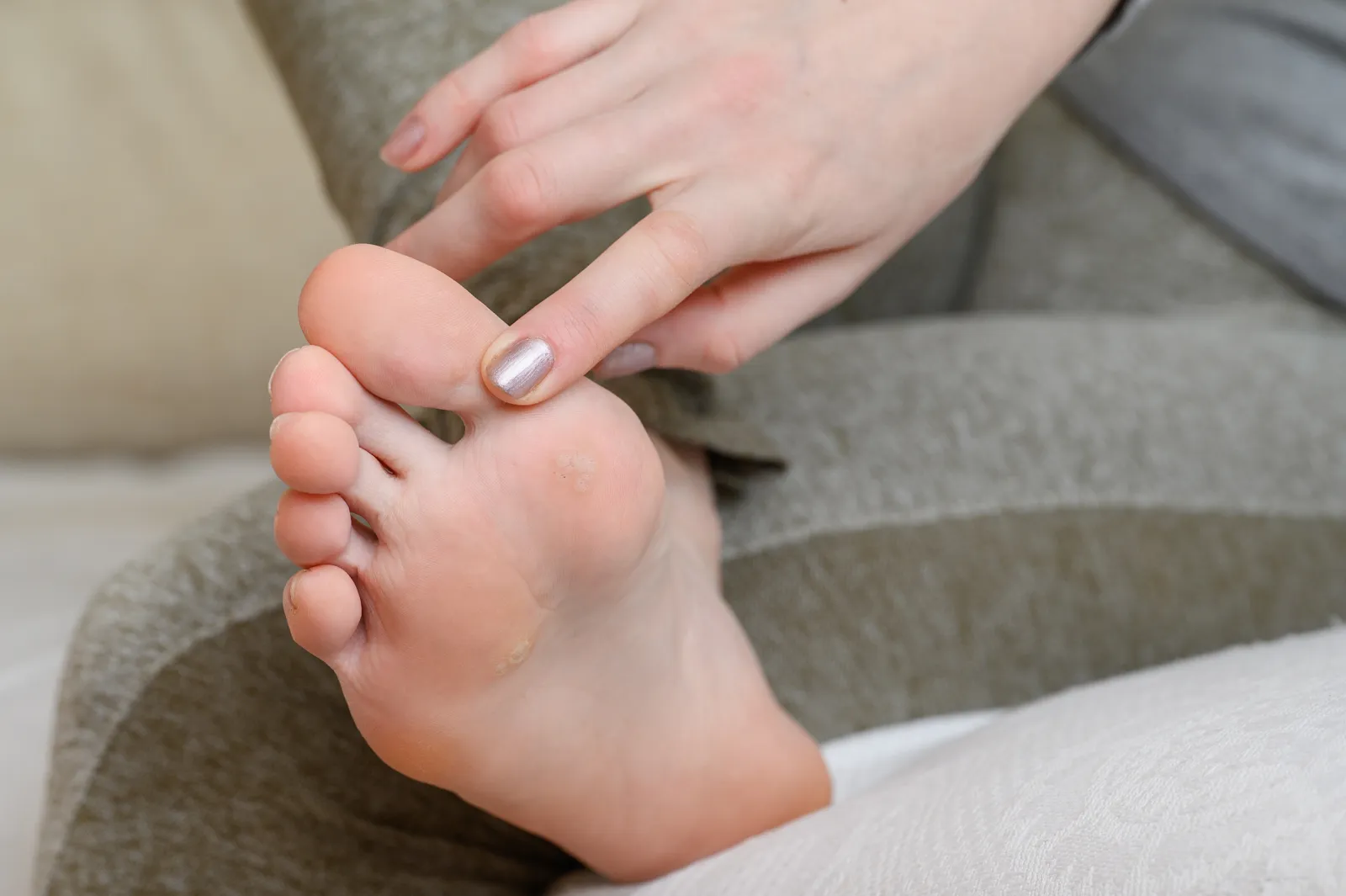
What Are Plantar Warts?
Plantar warts are small growths on the bottom of the foot caused by the human papillomavirus, or HPV. The virus enters through tiny cuts or breaks in the skin. Because we walk on them, plantar warts are often pushed inward under a layer of thick skin, which is why they can feel like a stone in your shoe.
They are common in children, teens and anyone who walks barefoot in locker rooms, pool decks or shared showers.
Some warts disappear on their own, but many stick around for months or years and can spread to other parts of the foot. Plantar warts can also become painful enough to change the way you walk, which leads to other aches.
How to Recognize a Plantar Wart
Over-the-counter wart treatments work for some people, but they often take a long time and can irritate healthy skin around the wart. If a wart has not improved after a few weeks of home care, professional treatment is usually faster.
Plantar warts often show:
- A small, rough, grainy growth on the sole or toes
- Tiny black dots, which are small clotted blood vessels
- Thick skin over a spot on the bottom of the foot
- Pain when squeezed from side to side or when standing
- Clusters of warts, sometimes called mosaic warts
Warts, Corns or Calluses?
Plantar warts are easy to mistake for corns or calluses, and the treatments are different. A callus has normal skin lines running through it, while a wart interrupts them. Dr. Saulabiu will examine the spot to confirm what it is before treating it. Any growth that bleeds, changes color or keeps growing should always be checked.
Warts are caused by a virus that lives in warm, moist places, so they are especially common in kids who swim or play barefoot sports. Keeping feet dry, wearing shower shoes in public areas and not picking at a wart all help keep it from spreading to other spots or to family members.
How We Treat Plantar Warts
Most warts take more than one visit to clear completely. Dr. Saulabiu will set up a schedule that fits your needs and check that the skin is healing well between treatments. Patients in Dickinson and nearby communities can often be seen quickly for wart care.
Treatment depends on the size, number and location of the warts and the patient's age. Options may include:
- Careful in-office debridement of the thick skin covering the wart
- Topical in-office treatments applied by Dr. Saulabiu
- Class IV laser therapy for stubborn or recurring warts
- Padding to relieve pressure while the skin heals
- Prevention tips, such as wearing sandals in shared showers

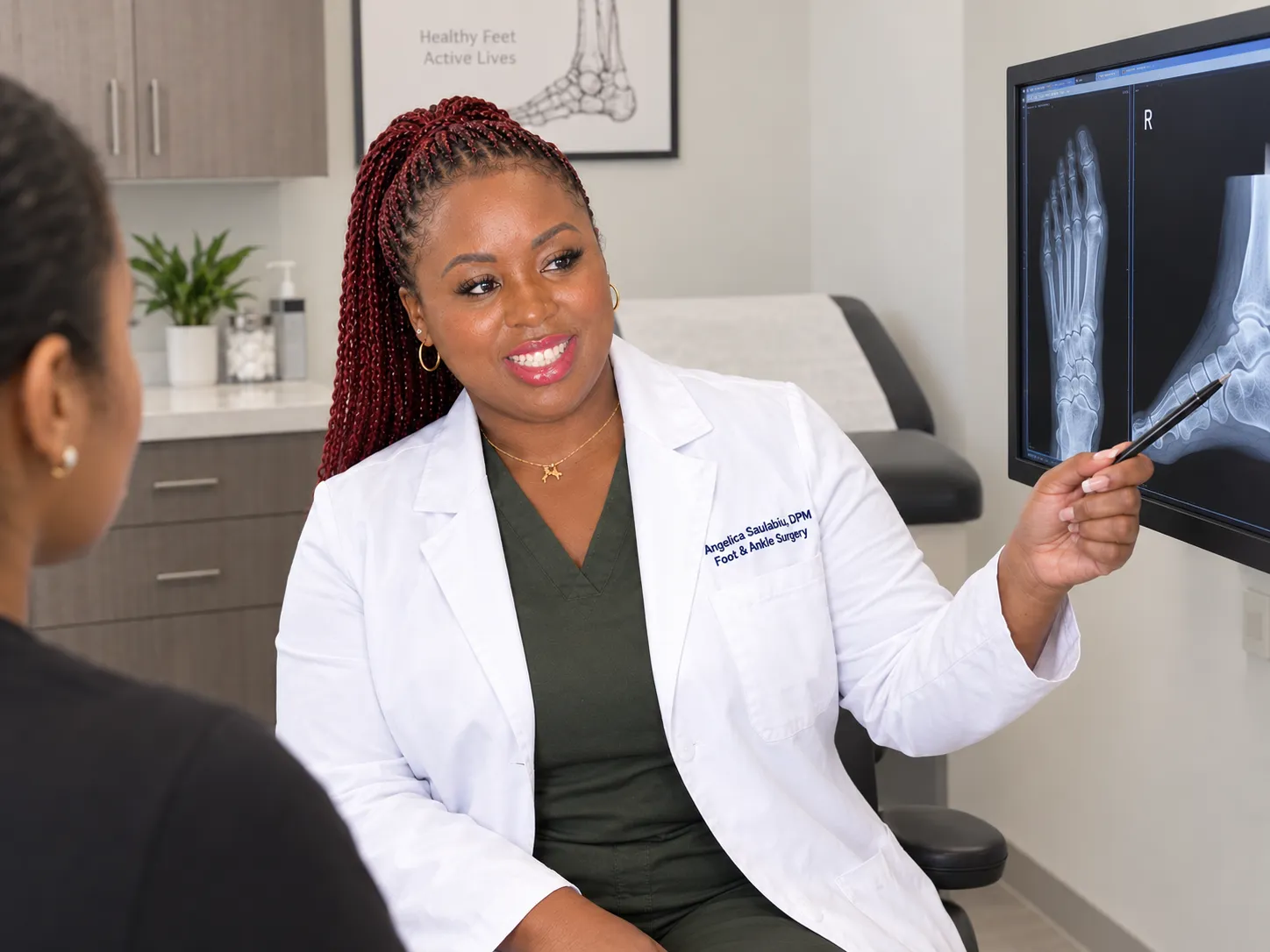
Care From Dr. Angelica Saulabiu, DPM
Dr. Saulabiu is a foot and ankle surgeon who takes time to explain what is going on and what your options are. Most visits include an exam, on-site X-rays when needed and a clear plan before you leave.
Frequently Asked Questions
Are plantar warts contagious?
Yes, they can spread through direct contact or shared wet surfaces. Covering the wart and not sharing towels or shoes helps.
Should I cut out a plantar wart myself?
No. Cutting at home can cause bleeding, infection and spread. This is especially important if you have diabetes or poor circulation.
Do you treat warts in children?
Yes. We see children through seniors and choose gentle treatments suited to younger patients.
Related Care
Corns and Calluses
Hard, painful skin from pressure and friction, safely trimmed and prevented.
Learn MoreAthlete’s Foot
Itchy, peeling, cracked skin from a fungal infection, cleared and kept from returning.
Learn MoreLaser Therapy
Class IV laser treatment for foot pain and inflammation, plus laser care for toenail fungus.
Learn MoreRoutine Foot Care
Nail care, corns, calluses and foot checks that keep small problems from growing.
Learn More