
Diabetic Foot Care in Dickinson, TX
For people with diabetes, even a small blister can become serious. Regular exams and early care help protect your feet, your mobility and your health.
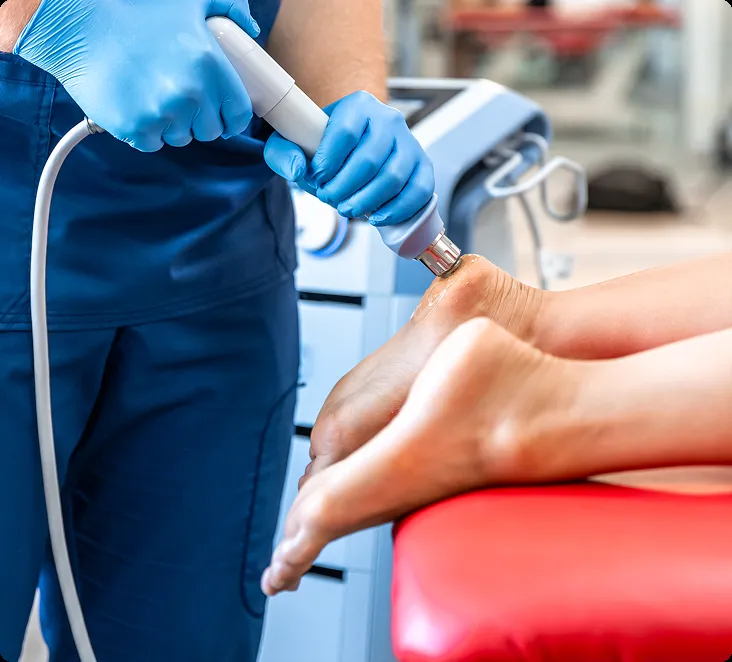
Why Diabetes Puts Your Feet at Risk
For people with diabetes, even the smallest blister, sore or cut on the foot can pose real risks. Diabetes can damage nerves (neuropathy) so you may not feel an injury, and it can reduce circulation so wounds heal slowly. Something as minor as a pebble in a shoe can progress to a wound that does not heal and then to a dangerous infection.
Foot infections and their complications are a leading cause of hospitalization for people with diabetes. The good news is that prevention and early detection make a real difference. Along with healthy blood sugar levels and a daily foot check at home, regular visits with a podiatrist are one of the best ways to protect your feet.

Who Needs Diabetic Foot Care
Anyone with diabetes benefits from regular foot exams. Care is especially important if you have:
- Numbness, tingling or burning in your feet
- Cold feet, color changes or slow-healing cuts
- A history of foot ulcers or wounds
- Thick nails, corns or calluses that are hard to care for at home
- Changes in foot shape, such as bunions or hammertoes
- Trouble seeing or reaching your feet for daily checks
What a Diabetic Foot Exam Includes
Dr. Saulabiu will screen for neuropathy and vascular changes and check your feet for redness, swelling and wounds. She will walk you through what she finds and what it means for you.
- Sensation testing to check for nerve changes
- A circulation check of the feet and ankles
- Careful nail and skin care, including corns and calluses
- Footwear review and custom orthotics when pressure relief is needed
- Wound care right away if a cut or ulcer is found
- A personal plan for daily home checks and follow-up visits
Why Choose Premiere Pointe for Diabetic Care
Diabetic foot care is a long-term partnership, and we treat it that way. Dr. Saulabiu takes time to teach you and your family how to inspect and care for your feet, and she explains every finding in plain language. When a wound needs more support, our team works with your other doctors to help it heal.
We are located on FM 517 in Dickinson, close to League City. We accept most major plans, including Medicare, welcome walk-ins and se habla español.

Care From Dr. Angelica Saulabiu, DPM
Dr. Saulabiu is a foot and ankle surgeon who takes time to explain what is going on and what your options are. Most visits include an exam, on-site X-rays when needed and a clear plan before you leave.
Frequently Asked Questions
How often should someone with diabetes see a podiatrist?
Most people with diabetes should have a foot exam at least once a year. If you have neuropathy, poor circulation or a history of wounds, Dr. Saulabiu may recommend more frequent visits.
What should I check for at home?
Look at both feet every day for cuts, blisters, redness, swelling or color changes, including between the toes. Use a mirror or ask a family member if it is hard to see.
When should I call about a foot wound?
Right away. Anyone with diabetes should have any foot wound checked, even if it looks minor. Walk-ins are welcome.
Related Care
Wound Care
Prompt, gentle treatment for foot sores and ulcers that are slow to heal.
Learn MoreCustom Orthotics
Shoe inserts made for your feet to ease heel, arch and ball-of-foot pain.
Learn MoreRoutine Foot Care
Nail care, corns, calluses and foot checks that keep small problems from growing.
Learn MoreNeuropathy
Burning, tingling or numbness in the feet, with care that protects your long-term foot health.
Learn MoreCorns and Calluses
Hard, painful skin from pressure and friction, safely trimmed and prevented.
Learn More