
Corn & Callus Treatment in Dickinson, TX
Corns and calluses are your skin's way of protecting itself from pressure. We remove them safely and fix the friction that keeps bringing them back.
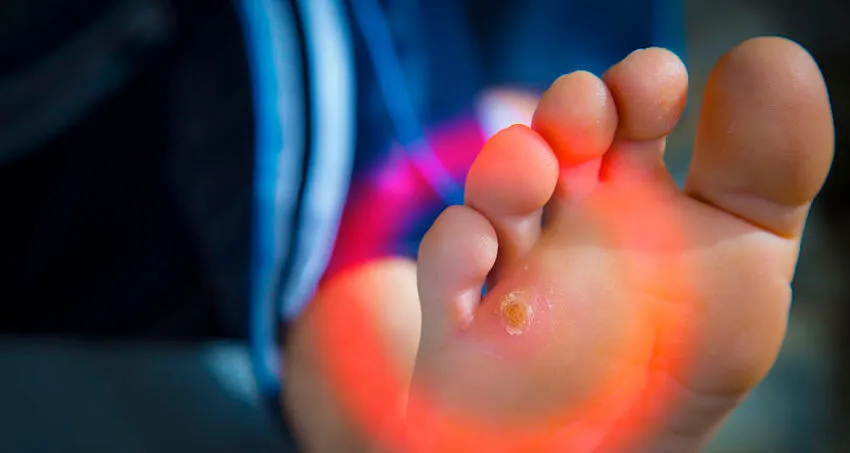
Corns vs. Calluses
Corns and calluses are thick, hardened layers of skin that form as the body's protective response to ongoing pressure and friction. They can form anywhere but most often develop on the feet.
Calluses are rough, hard patches that look slightly yellowish and usually appear on the ball of the foot or heel. They vary in size, lack sharp edges and are not usually painful. Corns are small, cone-shaped bumps with a core that points inward. They tend to form on the tops and sides of the toes and between the toes, and they can be quite painful.
Both are signs that something is putting too much pressure on one spot. Trimming the thick skin brings quick relief, but lasting results come from finding and fixing the pressure behind it.
What Causes Them
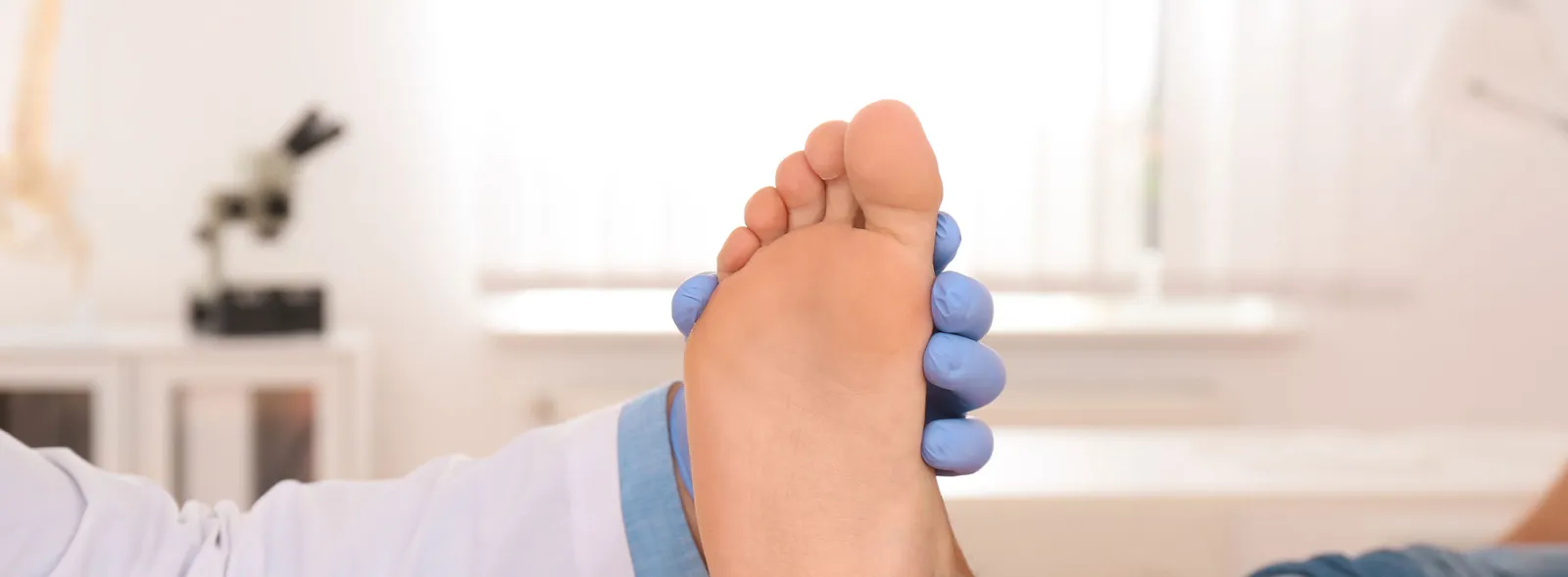
At our Dickinson office, Dr. Saulabiu sees corns and calluses in patients of all ages, from runners to grandparents. Most can be trimmed comfortably in a few minutes during a visit, and patients usually walk out feeling better right away. The bigger goal is making sure they don't come back as quickly.
Corns and calluses usually develop from pressure due to:
- Tight or ill-fitting shoes, high heels, bunched-up socks or going shoeless
- Sports and lots of walking or running
- Toe deformities such as hammertoes that rub against shoes
- Bony prominences, including bunions
- Incorrect foot alignment and gait abnormalities
When to Have Them Checked
It is always a good idea to have a podiatrist look at any unusual bump on your foot, especially if it hurts or interferes with daily activities. If you have diabetes, poor circulation or neuropathy, please don't cut or use medicated pads on corns at home. A small slip can lead to a wound that is slow to heal.
Patients sometimes come in thinking a painful spot is a corn when it is actually a plantar wart, a foreign body or a small ulcer. A quick exam makes sure the right problem gets the right treatment.
How Dr. Saulabiu Treats Corns and Calluses
Regular visits for corn and callus care are a common part of routine foot care, especially for older adults and people with diabetes. Dr. Saulabiu will also look at your shoes and the way you walk to spot what is causing the pressure.
Our goal is to relieve the pain now and stop the problem from returning:
- Safe in-office paring and trimming of corns and calluses
- Appropriate medicated patches and home care instructions
- Well-fitting footwear advice and protective padding
- Custom orthotics to correct pressure points and prevent recurrence
- A cortisone injection for persistent pain
- Correcting an underlying bunion or hammertoe, sometimes with minimally invasive surgery, when conservative care is not enough
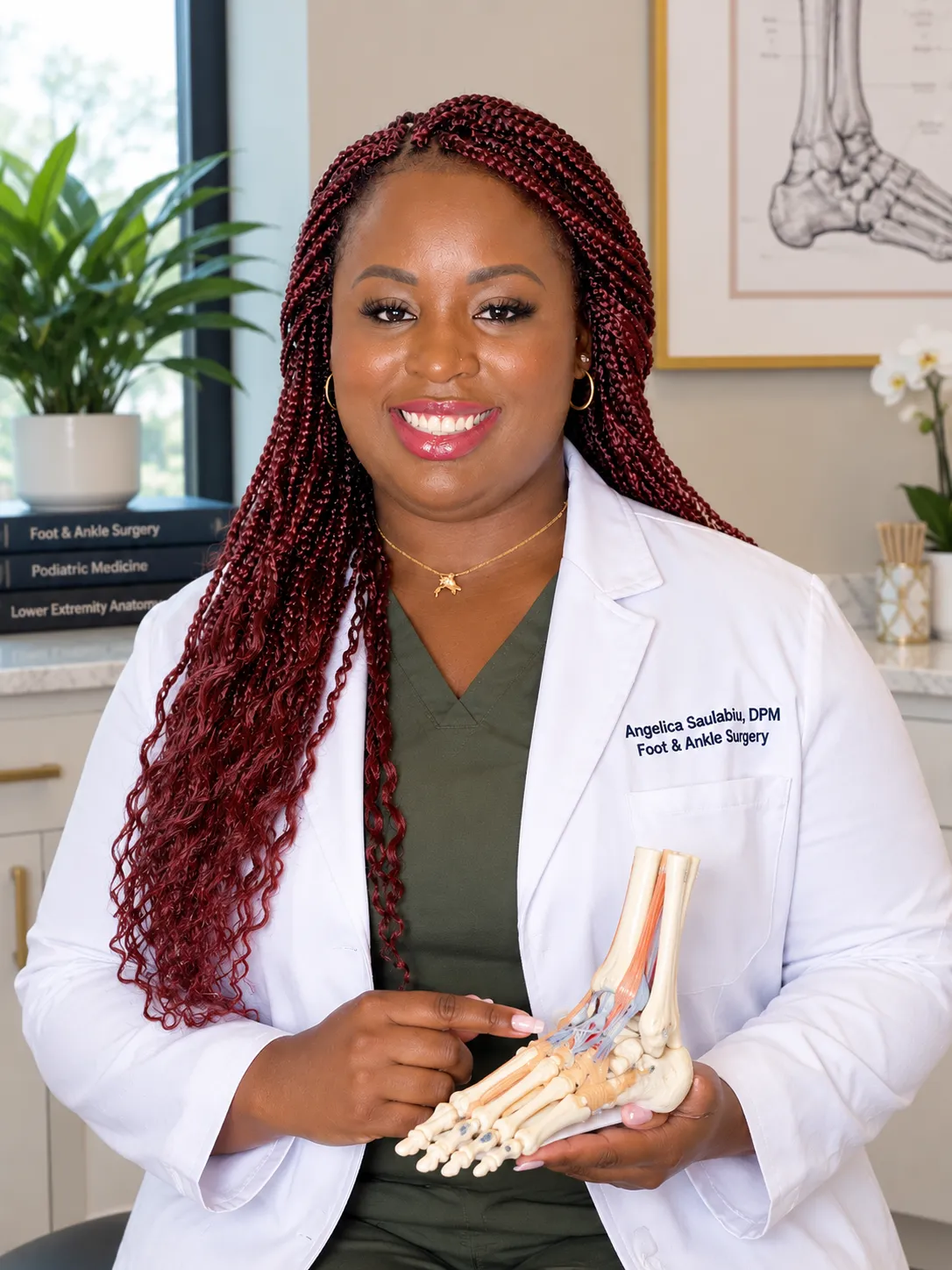
Care From Dr. Angelica Saulabiu, DPM
Dr. Saulabiu is a foot and ankle surgeon who takes time to explain what is going on and what your options are. Most visits include an exam, on-site X-rays when needed and a clear plan before you leave.
Frequently Asked Questions
Will a corn go away if I remove it?
Trimming brings quick relief, but the corn will usually return unless the pressure causing it is addressed with better shoes, padding or orthotics.
Are corn removal pads safe?
Medicated pads contain acid that can burn healthy skin. They are not recommended for people with diabetes or poor circulation.
Do calluses need treatment?
Not always. Painless calluses can be left alone, but thick or painful ones, or any callus on a diabetic foot, should be checked.
Related Care
Hammertoes
Bent toes that rub in shoes, treated early with padding, orthotics or correction.
Learn MoreBunions
A painful bump at the big toe joint, treated with conservative care or minimally invasive surgery.
Learn MoreRoutine Foot Care
Nail care, corns, calluses and foot checks that keep small problems from growing.
Learn MoreCustom Orthotics
Shoe inserts made for your feet to ease heel, arch and ball-of-foot pain.
Learn More