
High Arched Feet Treatment in Dickinson, TX
High arches put extra pressure on your heels and the balls of your feet. The right support can ease pain and help keep your ankles stable.
What Are High Arches?
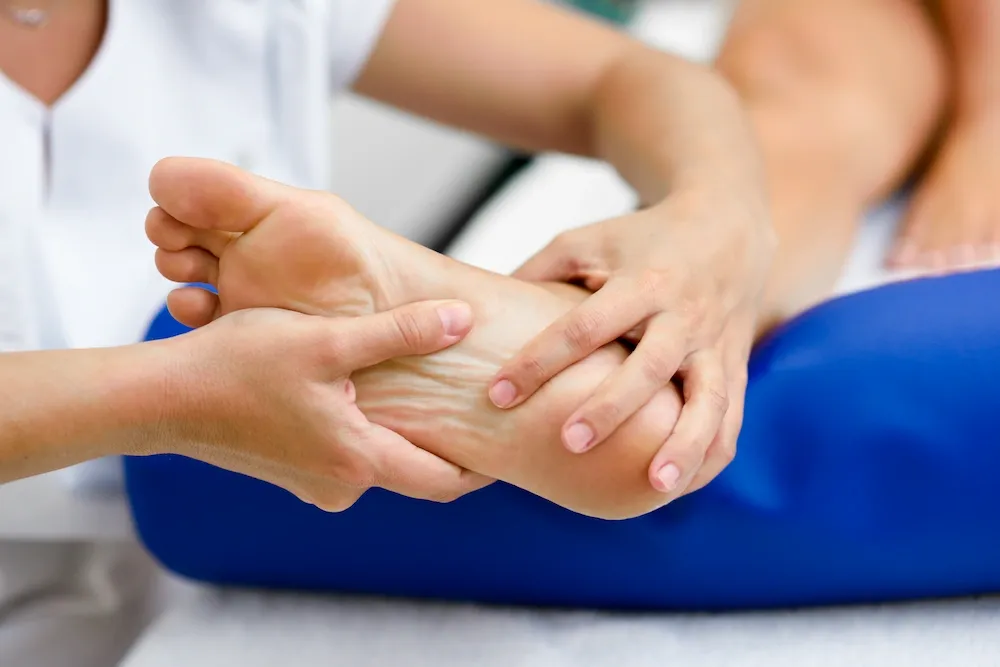
A high-arched foot, also called cavus foot, has an arch that is raised more than normal. Because less of the foot touches the ground, more weight lands on the heel and the ball of the foot. High arches can be inherited or can develop from nerve or muscle conditions, so a thorough evaluation is important.
Some people with high arches have no symptoms. Others deal with ongoing pain or repeated ankle sprains.
Unlike flat feet, which are very common, high arches are less often recognized as a cause of foot pain. Many people go years without realizing that their arch shape is behind their heel pain, calluses or sore ankles.
High arches can affect one foot or both. If you notice your arch getting higher over time, or your feet feel weak or unstable, it is especially important to be evaluated.
Symptoms of a High-Arched Foot
Shoes that work well for others may feel wrong for a high-arched foot. Thin soles, narrow toe boxes and shoes without cushioning can all increase pressure on the heel and forefoot.
You may notice:
- Pain in the heel or the ball of the foot
- Calluses under the ball of the foot or on the heel
- Hammertoes or claw toes
- Frequent ankle rolling or sprains
- Difficulty finding shoes that fit well
Causes and Related Problems
High arches often run in families. In other cases they are linked to neurological or muscle conditions that change the balance of the foot, which is why a new or worsening high arch should be checked. Because the foot absorbs shock less well, people with high arches are more prone to plantar fasciitis, ball of foot pain, stress fractures and ankle instability.
Because high arches can be linked to nerve or muscle conditions, Dr. Saulabiu will ask about your family history, balance and any weakness in your legs. At our Dickinson office, that careful history, along with an exam of how you stand and walk, helps decide whether simple support is enough or whether more evaluation is needed. Patients who notice that one foot is changing faster than the other should mention it at their visit.
Treatment for High Arches in Dickinson
With the right support, most people with high arches can stay active and comfortable. Dr. Saulabiu will also check for related problems like hammertoes and calluses and treat them as part of the same plan.
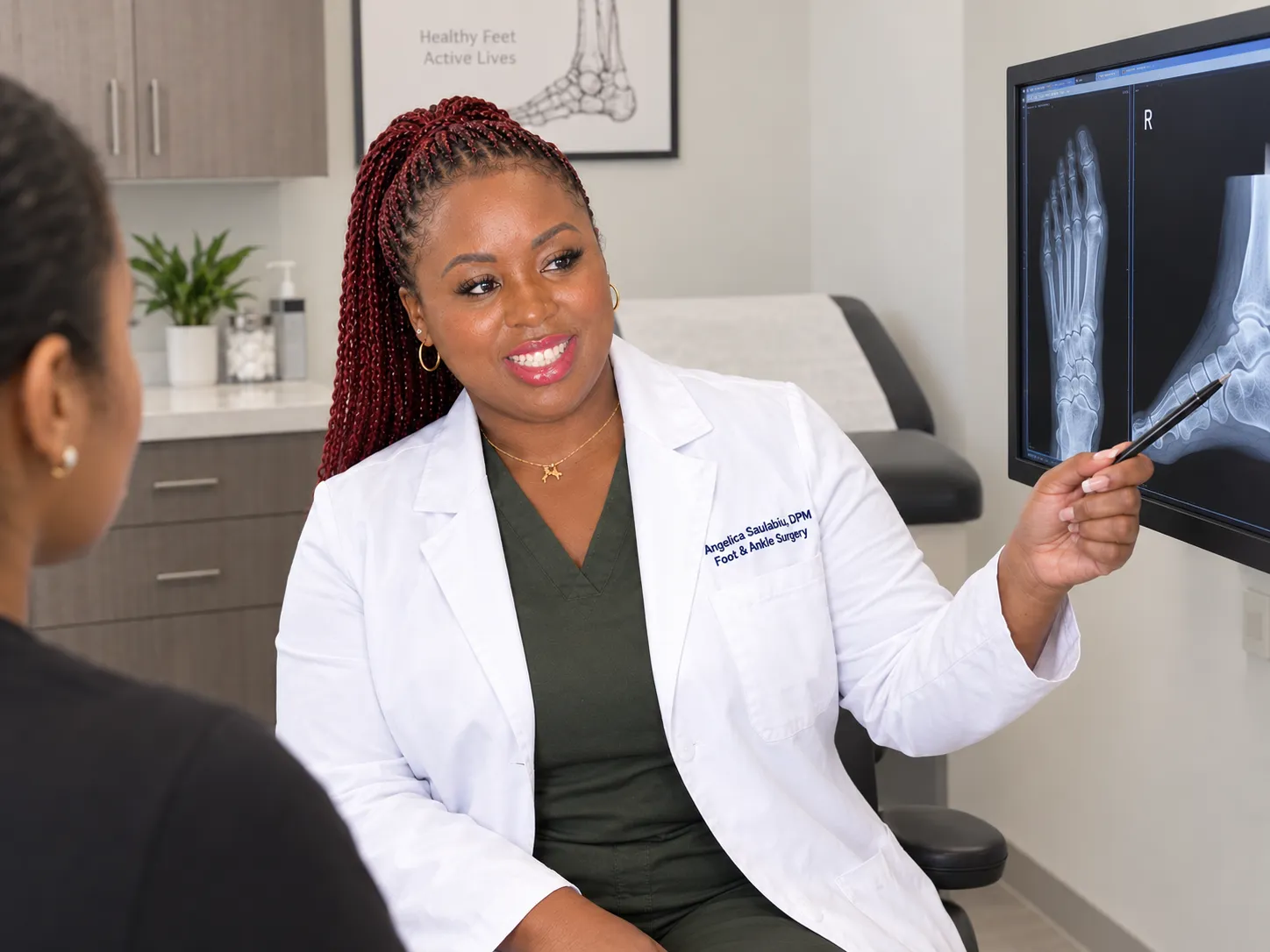
Dr. Saulabiu examines your foot structure and how you walk, and may use on-site X-rays. Treatment may include:
- Custom orthotics that cushion and spread pressure across the foot
- Shoes with good cushioning and ankle support
- Padding for calluses and pressure points
- Bracing and strengthening to help stabilize the ankle
- Surgery to realign the foot when pain or instability persists despite conservative care
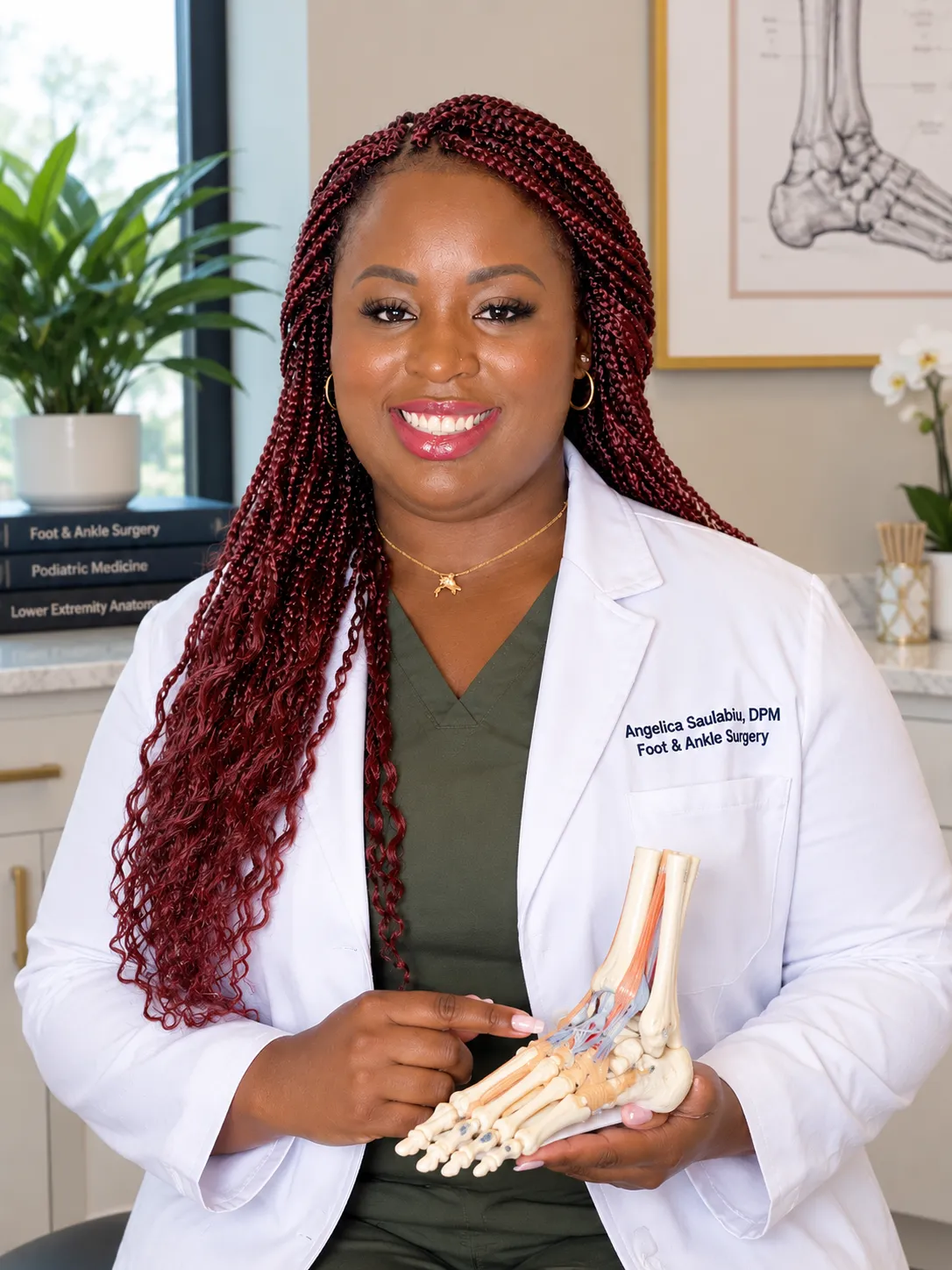
Care From Dr. Angelica Saulabiu, DPM
Dr. Saulabiu is a foot and ankle surgeon who takes time to explain what is going on and what your options are. Most visits include an exam, on-site X-rays when needed and a clear plan before you leave.
Frequently Asked Questions
Are high arches a problem?
Not always, but they often cause heel and forefoot pain and make ankle sprains more likely. Support can prevent many of these issues.
What shoes are best for high arches?
Look for good cushioning, a stable heel and room for orthotics. Dr. Saulabiu can give advice based on your foot and activities.
Why do I keep spraining my ankle?
High arches tilt the foot outward, which can lead to repeated ankle rolling. Orthotics, bracing and strengthening can help.
Related Care
Custom Orthotics
Shoe inserts made for your feet to ease heel, arch and ball-of-foot pain.
Learn MoreBall of Foot Pain
Aching, burning or sharp pain under the front of the foot, diagnosed and treated.
Learn MoreAnkle Sprains
Rolled or twisted ankles, assessed with on-site X-rays and treated to heal strong.
Learn MoreFlat Feet
Fallen arches that cause foot, ankle or leg pain, supported with custom care.
Learn More