
Flat Feet Treatment in Dickinson, TX
Fallen arches don't always hurt, but when they do, the pain can reach your ankles, knees and back. Support and the right plan can make a big difference.
Why Your Arches Matter
The arches of the feet add spring and flexibility to the midfoot. They help you push off, spread body weight, absorb shock when your foot hits the ground and keep your balance. Each arch also stores energy for walking, running and jumping.
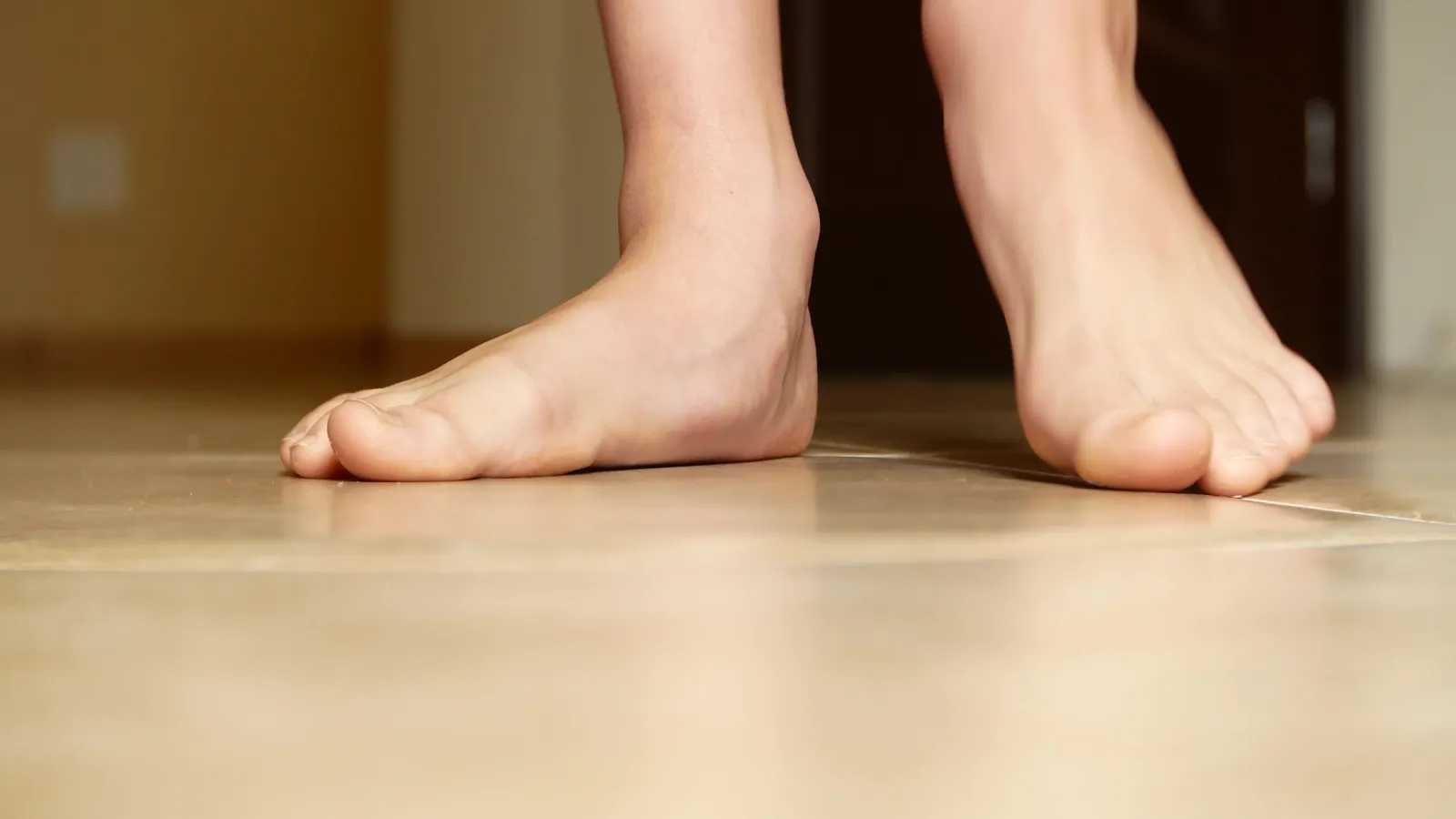
Flat feet, also called fallen arches, happen when the arches partly or fully collapse, so the sole sits flat or nearly flat on the ground. This can slightly change the alignment of the legs and lead to pain in the feet, ankles, legs, knees, hips and lower back.
Flat feet can be flexible, meaning the arch appears when you sit or stand on tiptoe, or rigid, meaning the arch stays flat no matter what. Flexible flat feet are common and often painless, while rigid flat feet are more likely to cause problems.
Symptoms of Flat Feet
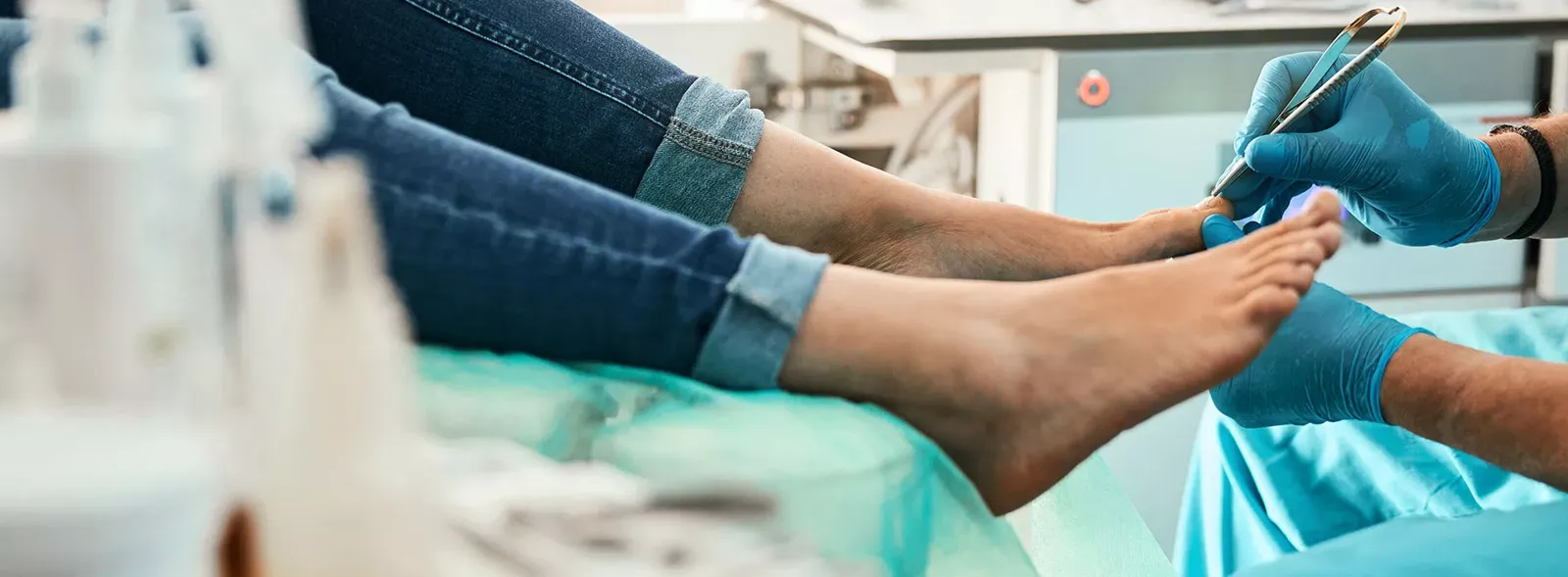
Patients in Dickinson often come in with knee or back pain and are surprised to learn that their feet are part of the problem. Supporting the arch can change the way the whole leg lines up, which is why a podiatrist is a good place to start when pain shows up in more than one spot.
Many people with flat feet have no pain at all. When symptoms appear, they may include:
- Aching in the arch or heel, especially after standing
- Swelling along the inside of the ankle
- Feet that tire quickly
- Pain in the ankles, shins, knees, hips or lower back
- Shoes that wear unevenly
Flat Feet in Children and Adults
Most young children have flexible flat feet that improve as they grow, but a child who complains of pain, trips often or avoids activity should be seen. In adults, arches can fall over time due to tendon weakening, injury, arthritis, weight gain or conditions like diabetes. A collapsing arch that is new or painful deserves a prompt evaluation.
One common cause of a painful, collapsing arch in adults is weakening of the tendon that supports the inside of the arch. Catching this early, while the foot is still flexible, makes treatment much simpler.
How We Help Restore Comfort
If you or your child has foot pain, it is a good idea to have a thorough evaluation. This is the best way to prevent more serious problems from developing and to find the support that keeps you active and comfortable.
Dr. Saulabiu will examine your feet standing and walking and may take on-site X-rays. The goal is to stabilize the causes of flat feet, improve foot function and relieve symptoms:
- Custom orthotics to support the arch and improve alignment
- Supportive footwear guidance for work, school and sports
- Stretching and strengthening exercises
- Class IV laser therapy for painful tendons
- Surgery to rebuild or realign the foot when severe flat foot does not respond to conservative care
Care From Dr. Angelica Saulabiu, DPM
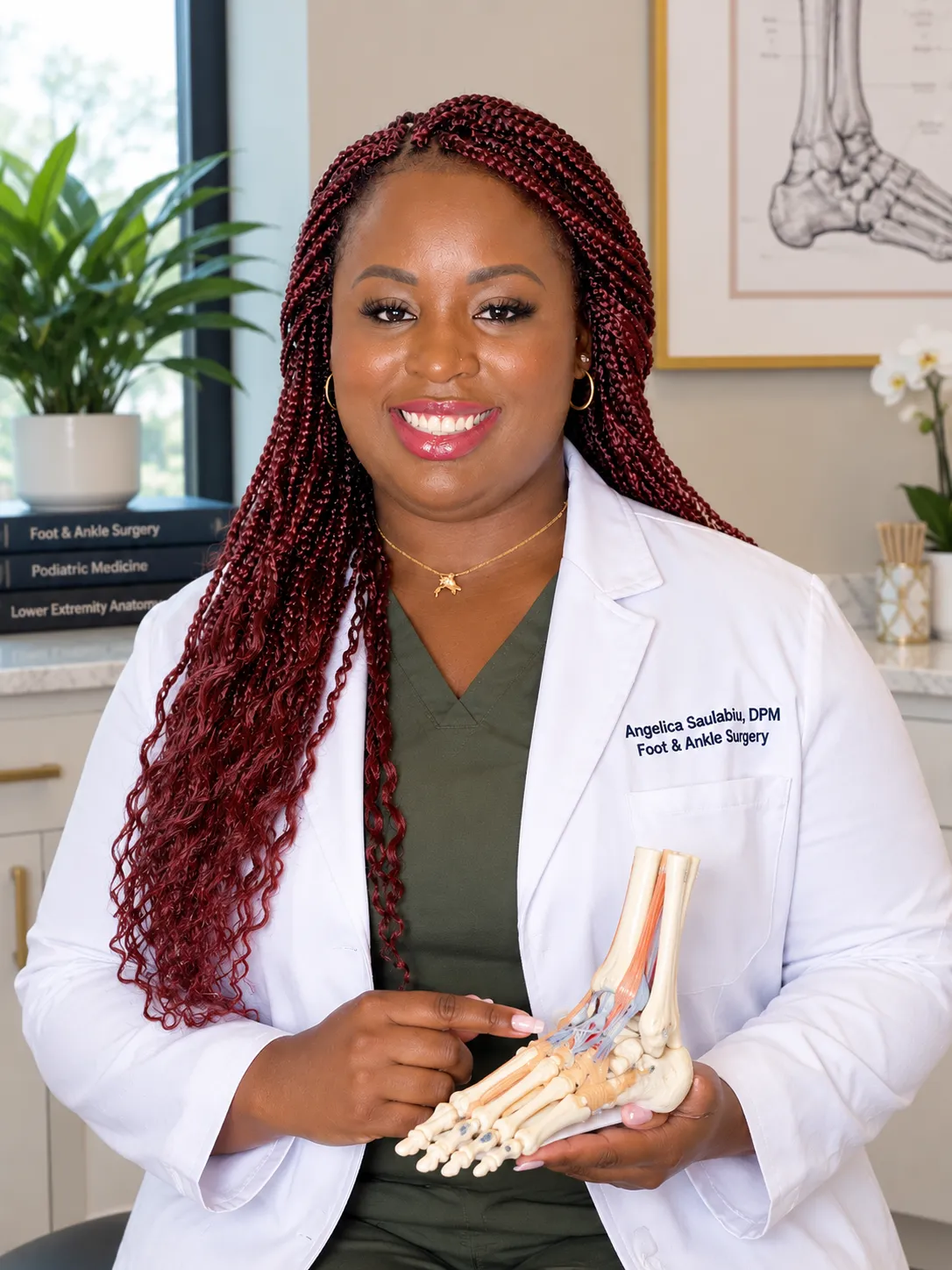
Dr. Saulabiu is a foot and ankle surgeon who takes time to explain what is going on and what your options are. Most visits include an exam, on-site X-rays when needed and a clear plan before you leave.
Frequently Asked Questions
Do flat feet always need treatment?
No. Flat feet that cause no pain often need nothing more than good shoes. Treatment is for pain, fatigue or problems higher up the leg.
Can my child grow out of flat feet?
Many children do as their arches develop. If your child has pain or trouble keeping up, an evaluation is a good idea.
Will orthotics fix my flat feet?
Custom orthotics don't permanently change the bone structure, but they support the arch and often relieve pain while you wear them.
Related Care
Custom Orthotics
Shoe inserts made for your feet to ease heel, arch and ball-of-foot pain.
Learn MoreHigh-Arched Feet
Arches that sit too high, causing pressure pain and unstable ankles, supported and treated.
Learn MoreFoot and Ankle Deformities
Changes in foot or ankle shape, corrected with orthotics, bracing or surgery.
Learn MoreHeel Pain
Pain in the bottom or back of the heel, diagnosed and treated at its source.
Learn More