
Foot & Ankle Deformity Care in Dickinson, TX
Changes in the shape of the foot or ankle can cause pain and make walking harder. Expert diagnosis and treatment help protect your mobility.

What Counts as a Foot or Ankle Deformity
A deformity is any change in the normal shape or alignment of the bones and joints of the foot or ankle. Some are present from birth or childhood, while others develop slowly over years. Common examples include bunions, tailor's bunions, hammertoes and claw toes, flat feet, high arches, bone spurs and ankle instability that changes how the foot sits.
Deformities often progress over time, especially when they change how weight moves through the foot.
Deformities can affect the forefoot, midfoot, rearfoot or ankle, and one problem often leads to another. A bunion can push the smaller toes out of place, and a collapsed arch can strain the ankle. Looking at the whole foot helps guide the right plan.
Signs Something Is Changing
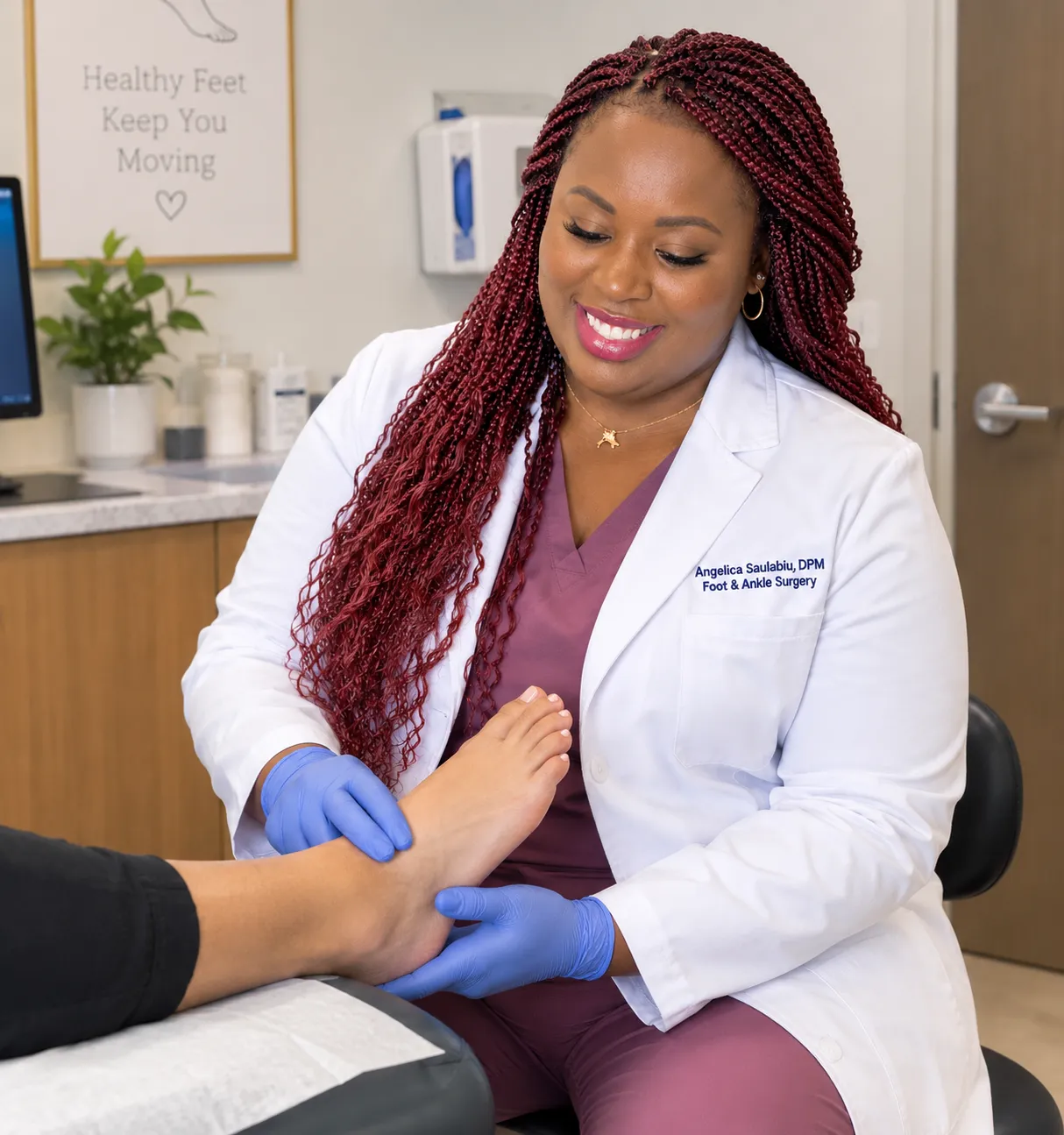
Early changes are often easy to miss, especially if they don't hurt yet. Comparing your feet side by side and noticing new shoe problems are simple ways to catch a deformity before it progresses.
Pay attention if you notice:
- A bump, bend or shift in the shape of your foot or toes
- Shoes that no longer fit or wear down unevenly
- Pain, swelling or stiffness in a joint
- Corns, calluses or sores over bony areas
- Changes in balance or how you walk
Where Deformities Come From
Inherited foot type is a big factor. Others include arthritis, old fractures or sprains that healed out of alignment, tendon problems, neuromuscular conditions and nerve damage from diabetes. Tight or poorly fitting shoes can speed up a deformity that is already developing. For people with diabetes, deformities can create pressure points that lead to wounds.
Diabetes deserves special mention. Nerve damage can lead to changes in foot shape that are easy to miss because they don't always hurt. Patients in Dickinson with diabetes should have their feet checked regularly so any change in shape or pressure can be caught early, before a wound or infection develops.
Correction and Care Options
Our goal is always to start with conservative care whenever it makes sense. Surgery is recommended only when it is truly needed and after all treatment options have been carefully discussed with you.
Dr. Saulabiu completed advanced training in reconstructive rearfoot and ankle surgery. She will use an exam and on-site X-rays to understand your deformity and discuss every option:
- Custom orthotics to support and realign the foot
- Padding, bracing and footwear changes to protect pressure points
- Class IV laser therapy to ease associated pain
- Minimally invasive surgery, often with no hardware, for bunions, hammertoes and similar deformities
- Reconstructive foot and ankle surgery for more complex cases
Care From Dr. Angelica Saulabiu, DPM
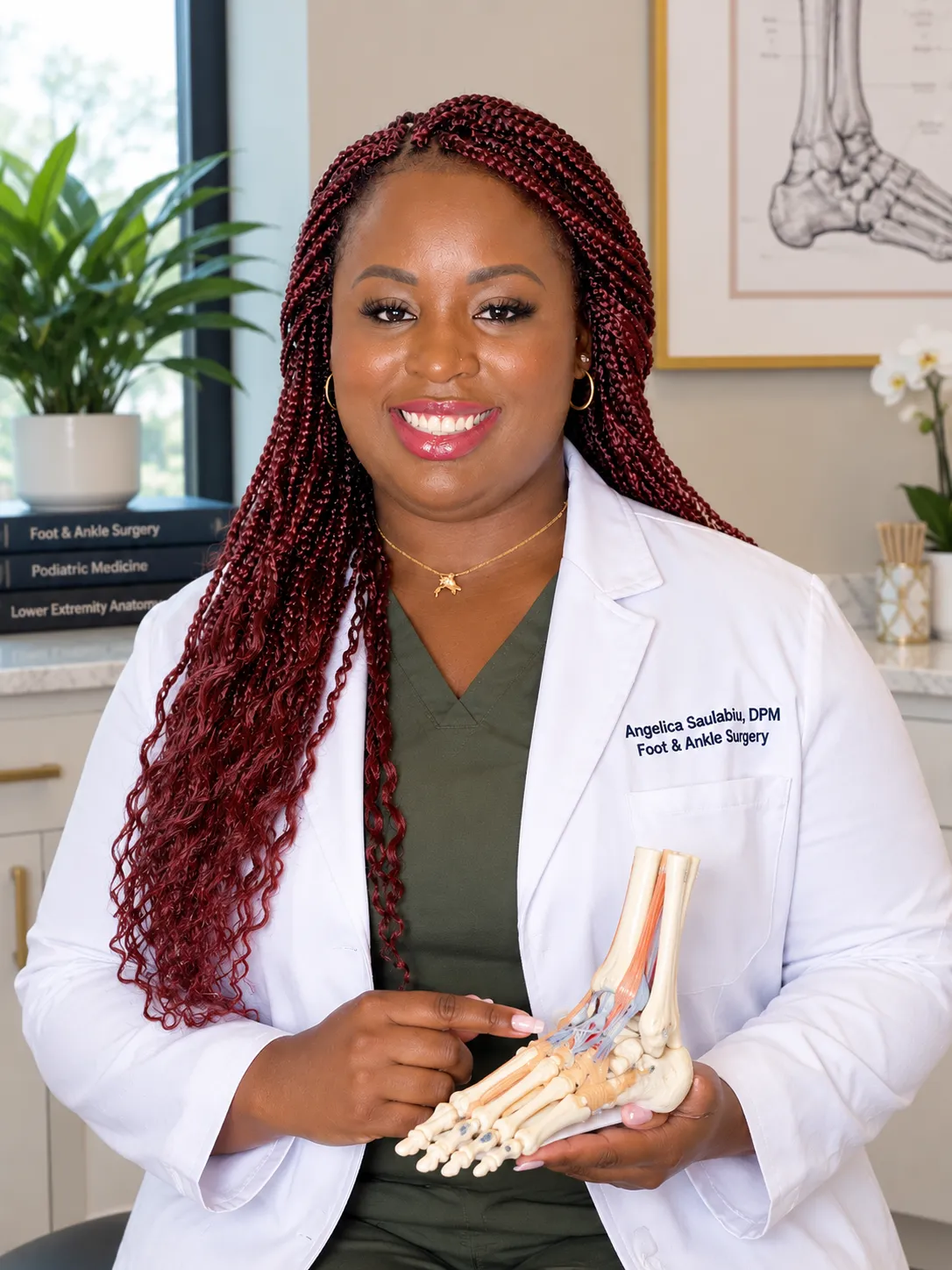
Dr. Saulabiu is a foot and ankle surgeon who takes time to explain what is going on and what your options are. Most visits include an exam, on-site X-rays when needed and a clear plan before you leave.
Frequently Asked Questions
Will a foot deformity get worse?
Many do progress over time, especially without support. Early care can slow changes and keep you comfortable longer.
Do all deformities need surgery?
No. Many are managed well with orthotics, shoes and padding. Surgery is recommended only after all options have been discussed.
Can surgery be done in the office?
Many procedures can be done as in-office surgeries, and minimally invasive techniques often mean a quicker recovery.
Related Care
Bunions
A painful bump at the big toe joint, treated with conservative care or minimally invasive surgery.
Learn MoreFlat Feet
Fallen arches that cause foot, ankle or leg pain, supported with custom care.
Learn MoreFoot and Ankle Surgery
Surgical care for bunions, hammertoes, injuries and deformity when other options fall short.
Learn MoreMinimally Invasive Foot Surgery
Smaller incisions, often no hardware and a faster return to your routine.
Learn More