
Plantar Fasciitis Treatment in Dickinson, TX
That stabbing pain under your heel when you first get out of bed is often plantar fasciitis. It is very treatable, and the earlier you start, the faster it settles.
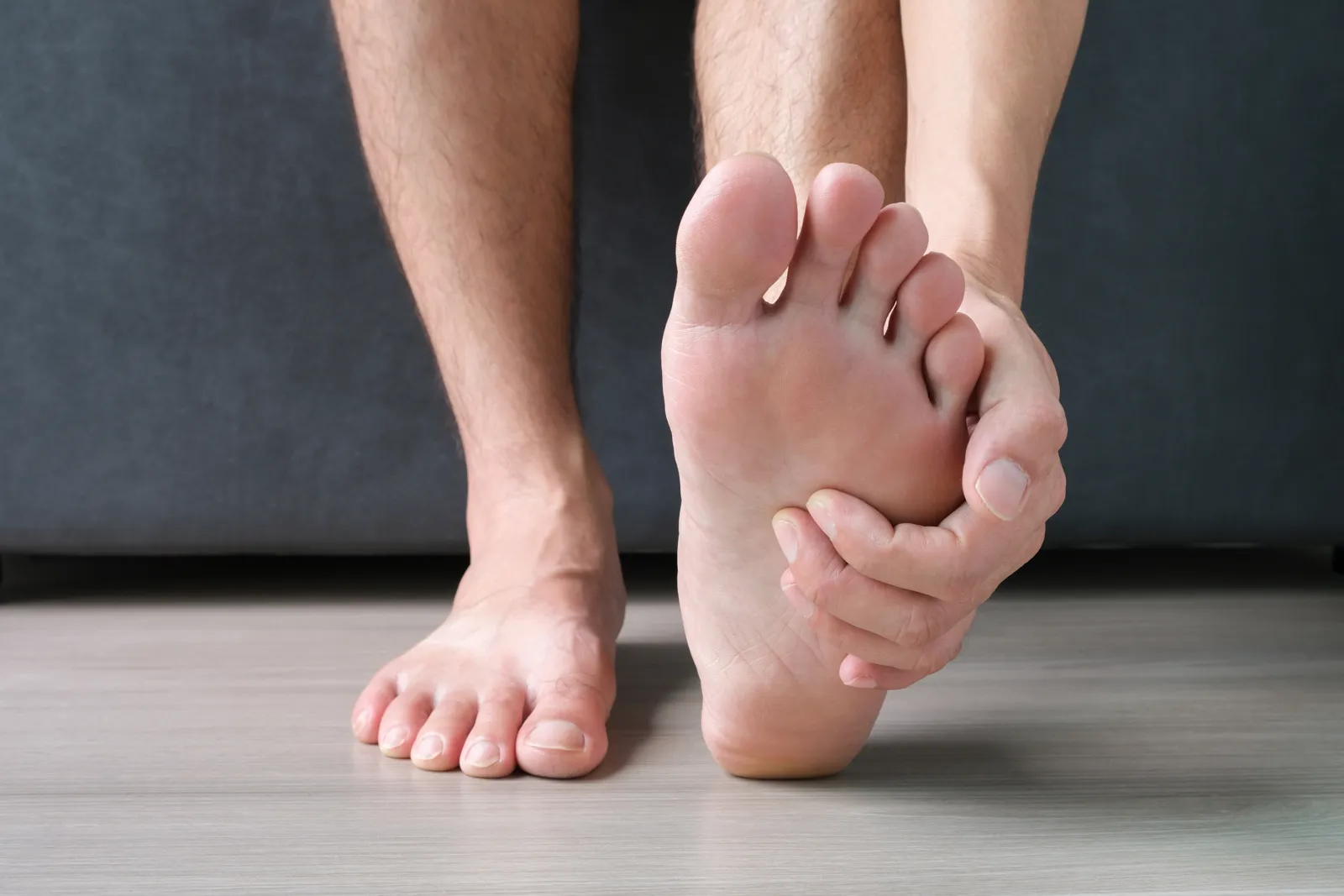
What Is Plantar Fasciitis?
The plantar fascia is a band of connective tissue that runs along the bottom of the foot from the heel to the base of the toes. It supports your arch and absorbs force every time you take a step. Overuse or prolonged wear and tear can strain this band, causing small tears, inflammation and pain where it attaches to the heel bone.
Plantar fasciitis can be a slow-healing and sometimes chronic condition, which is why early diagnosis matters. The good news is that most people improve with conservative care alone.
Many people notice it after a change in routine, like new shoes, a new job on their feet or training for an event. Others can't point to any one cause. Either way, the pain is real, and it tends to linger when it is ignored, so it is worth getting checked rather than waiting months for it to fade.
Signs You May Have Plantar Fasciitis
Patients in Dickinson often describe the morning pain as feeling like stepping on a nail, followed by slow relief as they move around.
The pain usually builds gradually rather than starting with a single injury. Common signs include:
- Sharp or stabbing pain on the bottom of the heel
- Pain that is worst with the first steps in the morning or after sitting
- Discomfort that eases with walking, then returns after long periods on your feet
- Tenderness along the arch or at the front of the heel
- A tight feeling in the calf or Achilles
Who Tends to Get It
Plantar fasciitis is common in runners and active adults, but it also affects people who stand on hard floors at work, wear unsupportive shoes, have recently gained weight, or have flat feet or high arches. Tight calf muscles add tension to the fascia, and a sudden jump in activity, like a new walking routine, is a frequent trigger.
Plantar fasciitis is not just an athlete's problem. Teachers, nurses, warehouse workers and parents chasing kids all around town are just as likely to feel it. If you have pain in both heels, numbness or pain at night, let Dr. Saulabiu know, since those signs can point to a different cause.
How Dr. Saulabiu Treats Plantar Fasciitis
At our Dickinson office, Dr. Saulabiu examines your foot, watches how you walk and may take on-site X-rays to rule out a stress fracture or other cause of heel pain. Your plan is built around your activity level and how long the pain has been there.
Most patients start to feel a difference within a few weeks of consistent care. Dr. Saulabiu checks your progress at follow-up visits and adjusts the plan if the heel is slow to respond, so you are never left guessing about what comes next.
- Stretching guidance and footwear changes to take strain off the fascia
- Custom orthotics to support the arch and spread pressure more evenly
- Class IV laser therapy to calm inflammation and support healing
- Stem cell injections for stubborn cases that have not responded to other care
- Minimally invasive surgery when symptoms stay disabling after an extended course of conservative treatment

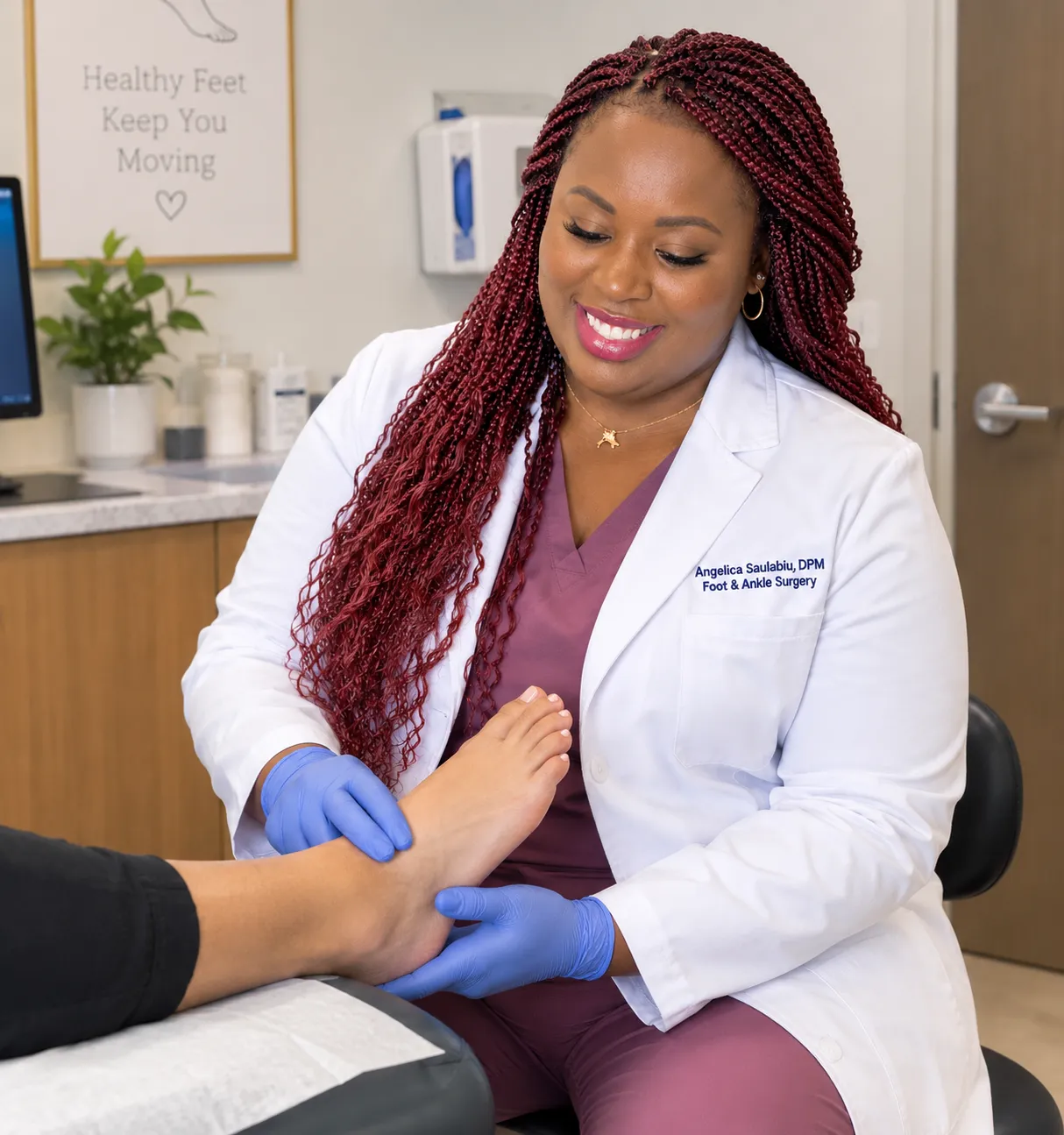
Care From Dr. Angelica Saulabiu, DPM
Dr. Saulabiu is a foot and ankle surgeon who takes time to explain what is going on and what your options are. Most visits include an exam, on-site X-rays when needed and a clear plan before you leave.
Frequently Asked Questions
Will plantar fasciitis go away on its own?
Mild cases sometimes ease with rest and better shoes, but many linger for months without treatment. Getting the right plan early usually shortens recovery.
Do I need surgery for plantar fasciitis?
Rarely. Most patients improve with conservative care, and surgery is only considered when pain stays disabling after an extended course of treatment.
Can I keep exercising?
Often yes, with changes. Dr. Saulabiu can suggest lower-impact options and support so you stay active while the fascia heals.
Related Care
Heel Pain
Pain in the bottom or back of the heel, diagnosed and treated at its source.
Learn MoreAchilles Tendinitis
Pain and stiffness at the back of the heel from an irritated Achilles tendon.
Learn MoreCustom Orthotics
Shoe inserts made for your feet to ease heel, arch and ball-of-foot pain.
Learn MoreLaser Therapy
Class IV laser treatment for foot pain and inflammation, plus laser care for toenail fungus.
Learn More