
Achilles Tendinitis Treatment in Dickinson, TX
Pain and stiffness at the back of the heel can mean your Achilles tendon is overworked. Treating it early helps prevent a longer recovery or a tear.
Understanding the Achilles Tendon
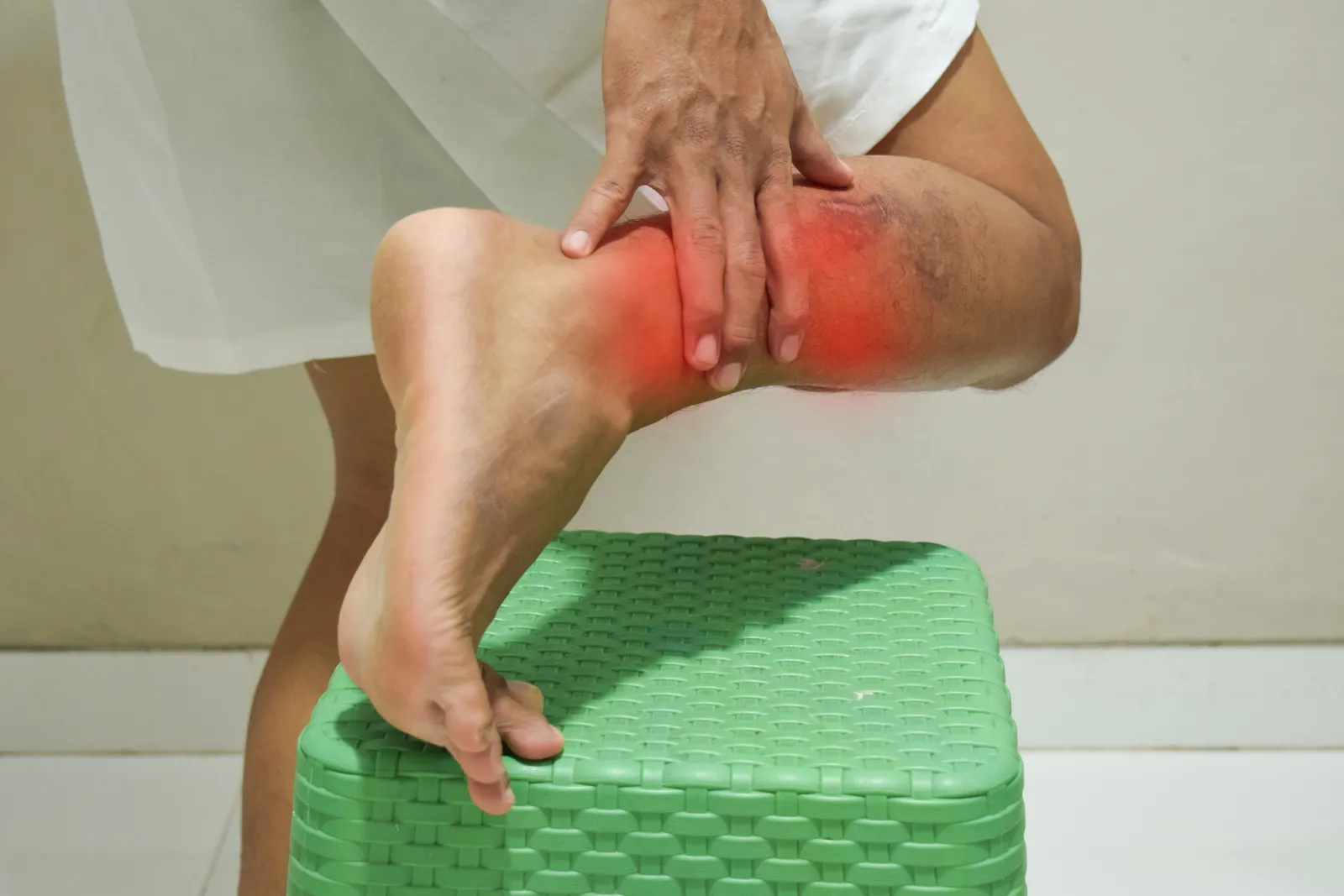
The Achilles tendon connects your calf muscles to the back of your heel bone. It is the largest tendon in the body and works every time you walk, climb stairs, run or jump. When it is overloaded, the tendon can become irritated and inflamed, a condition called Achilles tendinitis.
Left untreated, the tendon can thicken and weaken over time, which raises the risk of a partial or complete tear.
Tendinitis can affect the middle of the tendon, a few inches above the heel, or the spot where it attaches to the bone. Pain at the attachment is sometimes paired with a bony bump that rubs on shoes. Knowing which type you have helps guide the right treatment.
Our on-site X-rays help rule out heel spurs or calcium deposits at the attachment, which can change how the tendon is treated.
How Achilles Tendinitis Feels
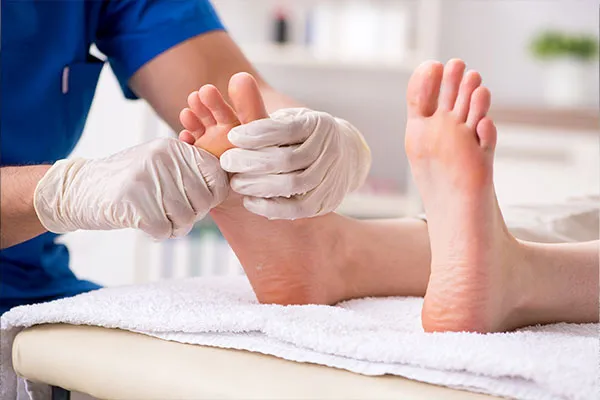
Many people try to push through the stiffness because it eases once they warm up. That pattern is a sign the tendon is irritated, and continuing to load it without a plan can slowly make it worse.
Common signs include:
- Pain along the back of the heel or lower calf
- Stiffness that is worst in the morning and eases with movement
- Pain that flares during or after exercise
- Swelling or a thickened, tender tendon
- A bump at the back of the heel
What Overloads the Achilles
Achilles tendinitis often follows a sudden increase in activity, more hill or speed work, or a return to sport after time off. Tight calf muscles, flat feet, worn-out shoes and frequent switching between high heels and flat shoes add strain. It is common in weekend athletes and runners, but it can happen to anyone who is on their feet a lot.
Patients in Dickinson often tell us the pain started after a new workout program, a change of shoes or a few weekends of yard work and pickup games. Small changes in training load can add up quickly for the Achilles, and catching the problem early keeps recovery short and simple. If both heels hurt or the pain is mostly at night, mention it, since that can point to another cause.
Treatment at Premiere Pointe Podiatry
Recovery takes patience, because tendons heal more slowly than muscles. Dr. Saulabiu will help you stay as active as possible while the tendon heals and guide you back to running, sports or long walks at a pace your body can handle.
Dr. Saulabiu will examine the tendon, check your foot mechanics and use on-site X-rays when needed. Treatment may include:
- Activity changes and a gradual calf stretching and strengthening plan
- Heel lifts or custom orthotics to reduce tendon strain
- Class IV laser therapy to ease inflammation and promote healing
- Stem cell injections for chronic tendon problems
- Surgical repair when the tendon is badly damaged or torn
Care From Dr. Angelica Saulabiu, DPM
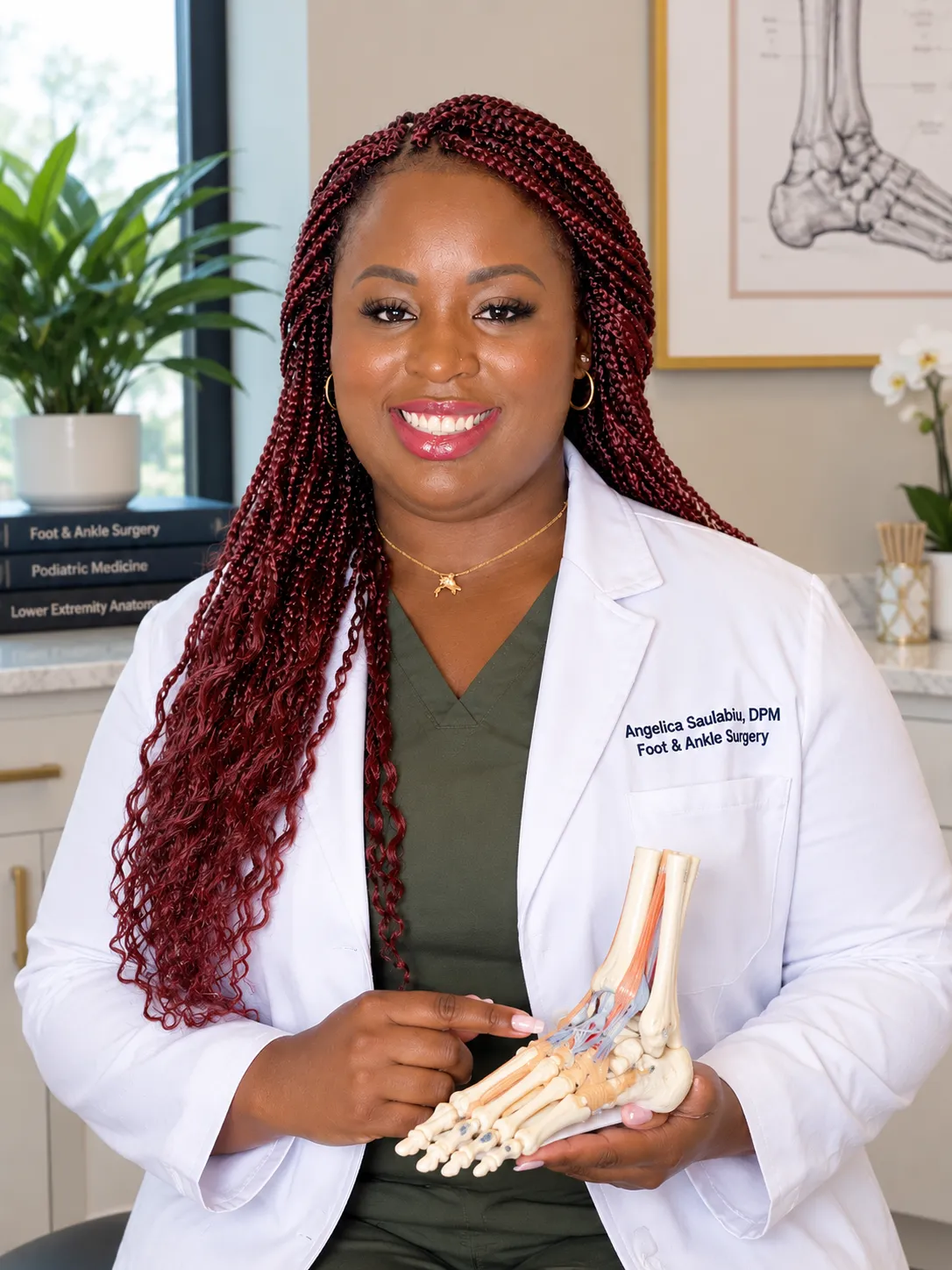
Dr. Saulabiu is a foot and ankle surgeon who takes time to explain what is going on and what your options are. Most visits include an exam, on-site X-rays when needed and a clear plan before you leave.
Frequently Asked Questions
How long does Achilles tendinitis take to heal?
Mild cases may settle within several weeks, while long-standing tendinitis can take a few months. Starting care early usually speeds things up.
Can I run with Achilles tendinitis?
Running through the pain often makes it worse. Dr. Saulabiu can guide a safe return so you stay active without setting back the tendon.
What if I felt a pop at the back of my ankle?
A sudden pop with sharp pain and weakness can mean a rupture. Get seen promptly. Walk-ins are welcome at our Dickinson office.
Related Care
Heel Pain
Pain in the bottom or back of the heel, diagnosed and treated at its source.
Learn MoreSports-Related Injuries
Sprains, tendon strains and overuse injuries from sports, treated for a safe return.
Learn MoreLaser Therapy
Class IV laser treatment for foot pain and inflammation, plus laser care for toenail fungus.
Learn MoreSports Medicine
Care for sprains, stress fractures and overuse injuries, with a plan to prevent the next one.
Learn More