
Minimally Invasive Foot Surgery in Dickinson, TX
Modern minimally invasive techniques let Dr. Saulabiu correct many foot problems through small incisions, often with no hardware and a faster return to life.
How Minimally Invasive Foot Surgery Works
Minimally invasive podiatry uses small incisions, specialized instruments and imaging to treat foot and ankle problems with less disruption to the muscles, ligaments and tissue around them. Procedures that once needed large incisions and long healing periods can now often be done in a much less invasive way.
For many patients, the benefits are significant. Smaller incisions often mean less pain after surgery, less swelling, minimal scarring and a faster return to normal activities. Many of Dr. Saulabiu's procedures are performed with no hardware, and some patients can walk shortly after their procedure while following their recovery plan.
Because less tissue is disturbed, there may also be a lower risk of infection and wound healing problems in certain cases. Every procedure is planned around your condition, your X-rays and your goals, and conservative care is always discussed first.
Conditions Treated With Minimally Invasive Techniques
Depending on the severity of your condition, minimally invasive surgery may help with:
- Bunions that cause pain, swelling or trouble with shoes
- Hammertoes and contracted toes with painful corns
- Chronic heel pain and plantar fasciitis that has not improved
- Neuromas and nerve pain in the ball of the foot
- Certain tendon injuries, fractures and arthritis
- Sports injuries that need structural correction
What to Expect From Consultation to Recovery
Visiting a surgeon can feel intimidating, especially after living with pain for a long time. We take it one step at a time.
- A detailed consultation about your symptoms, history, activity level and goals
- On-site X-rays to see the bone structure clearly
- A discussion of all options, with conservative care first when possible
- Your procedure, often in our office
- A personal recovery plan with close follow-up visits
- Guidance on returning to work, family life and exercise
Why Patients Choose Premiere Pointe
Many people put off care because they worry about downtime. Minimally invasive surgery helps ease that worry, which matters for working professionals, parents, athletes and older adults alike. Dr. Saulabiu, a foot and ankle surgeon with advanced training in reconstructive rearfoot and ankle surgery, explains every diagnosis and helps you decide whether this approach is right for you.
We believe good outcomes depend on attentive follow-up and education, not just the procedure itself. Se habla español, and we accept most major insurance plans.
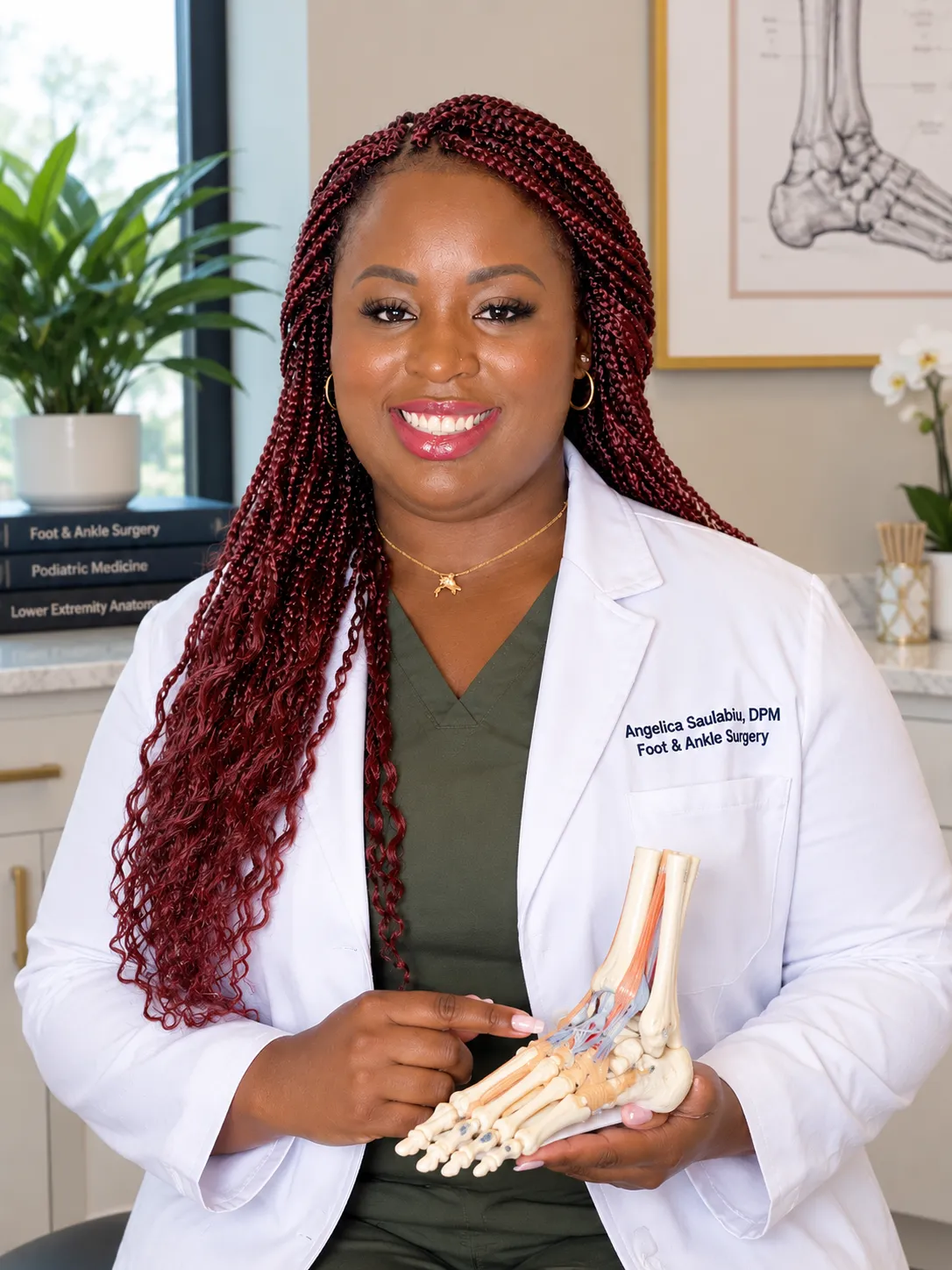
Care From Dr. Angelica Saulabiu, DPM
Dr. Saulabiu is a foot and ankle surgeon who takes time to explain what is going on and what your options are. Most visits include an exam, on-site X-rays when needed and a clear plan before you leave.
Frequently Asked Questions
Is minimally invasive surgery right for everyone?
Not every condition can be treated this way. Dr. Saulabiu evaluates your symptoms, X-rays, activity level and overall health before recommending the best approach for you.
Will I have screws or plates?
Many of our minimally invasive procedures are performed with no hardware. If hardware is needed for your case, Dr. Saulabiu will explain why before surgery.
How soon can I walk after surgery?
It depends on the procedure. Some patients can walk shortly afterward with a protective shoe, while others need more time. You will get a clear recovery plan before your surgery.
Related Care
Foot and Ankle Surgery
Surgical care for bunions, hammertoes, injuries and deformity when other options fall short.
Learn MoreBunions
A painful bump at the big toe joint, treated with conservative care or minimally invasive surgery.
Learn MoreHammertoes
Bent toes that rub in shoes, treated early with padding, orthotics or correction.
Learn MorePlantar Fasciitis
The most common cause of pain under the heel, especially with your first steps.
Learn MoreHeel Pain
Pain in the bottom or back of the heel, diagnosed and treated at its source.
Learn More