
Heel Pain Treatment in Dickinson, TX
Heel pain is one of the most common reasons people visit a podiatrist. Finding the true cause is the first step toward walking comfortably again.
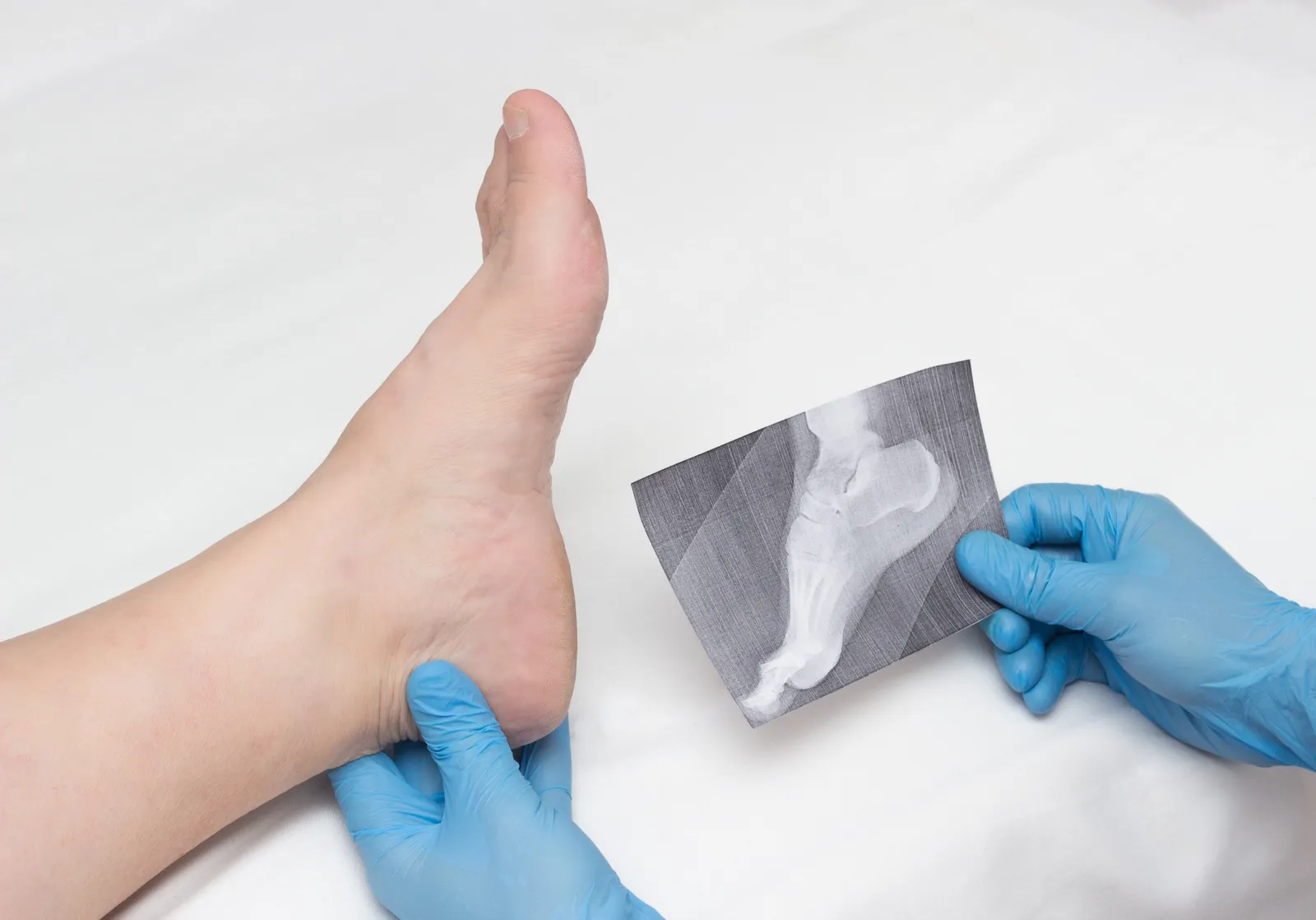
Why the Heel Hurts
As the largest of the 26 bones in the foot, the heel is built to handle heavy loads. Too much stress over time, though, can lead to problems. Heel pain may be felt in the front, back or bottom of the heel, and where it hurts is an important clue to what is causing it.
Pain under the heel is most often linked to plantar fasciitis. Pain at the back of the heel often points to the Achilles tendon. Other sources include stress fractures, tendinitis, arthritis, nerve irritation and cysts.
Heel pain often starts small, a little soreness after a long day, and slowly grows into pain that changes how you walk. That change in your stride can then strain your knees, hips and back. Treating the heel early protects the rest of your body too.
Common Heel Pain Symptoms
Children can get heel pain as well, usually during growth spurts when they are active in sports. Pain at the back of a child's heel after practice is common and worth having checked so they can keep playing comfortably.
Heel pain can show up in different ways depending on the cause:
- Stabbing pain with your first steps in the morning
- Aching after standing or walking for long periods
- Pain, swelling or a bump at the back of the heel
- Burning, tingling or numbness that may suggest nerve involvement
- Pain that keeps getting worse instead of better
Getting the Diagnosis Right
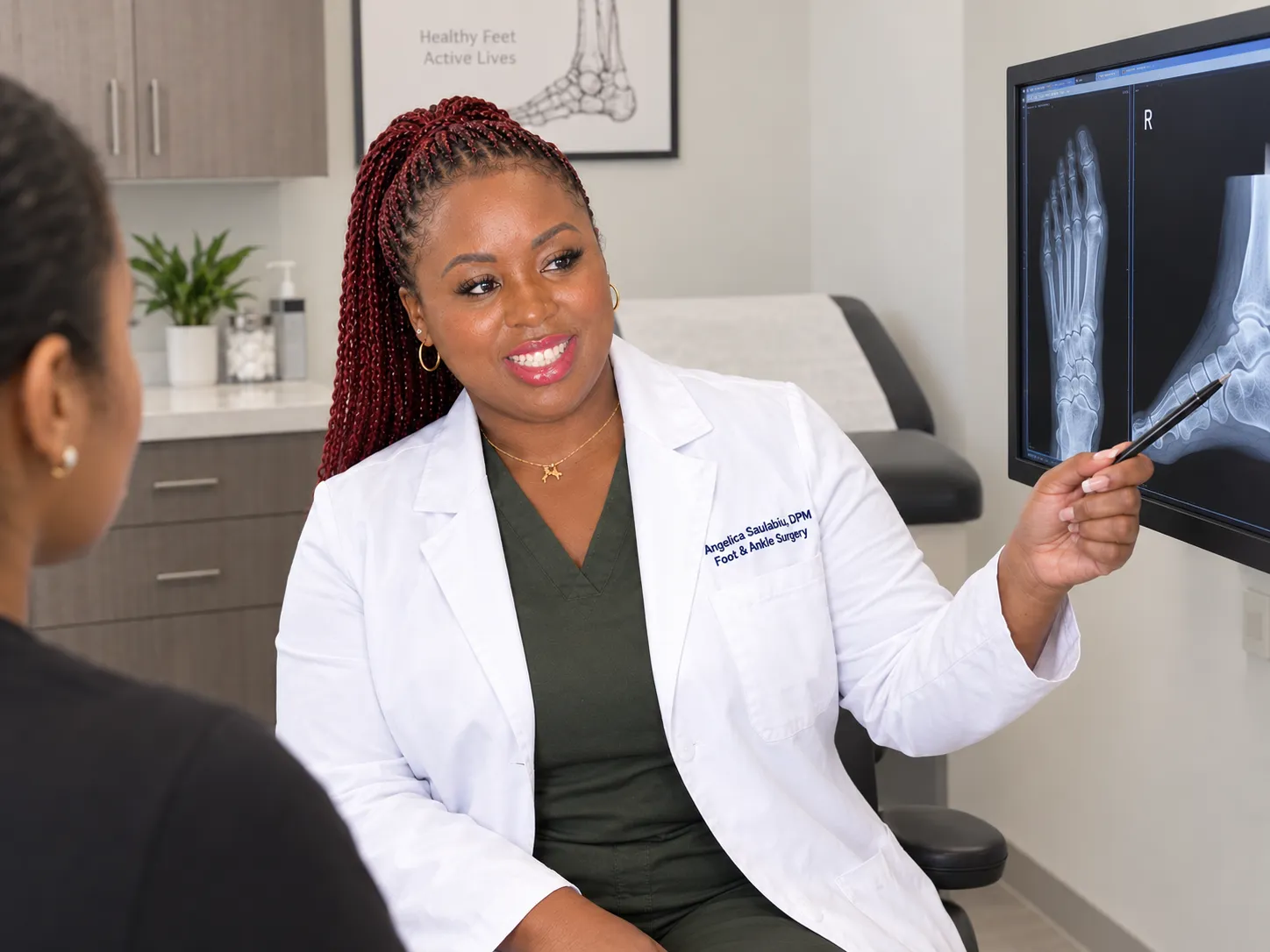
Because heel pain can happen for so many reasons, a thorough evaluation matters. Dr. Saulabiu reviews your history, examines the heel and how you walk, and uses on-site X-rays when needed to check for fractures, spurs or arthritis. Most patients leave their first visit in our Dickinson office with a clear explanation and a plan.
Early diagnosis and treatment help keep heel pain from becoming a long-term problem.
Bring the shoes you wear most often to your visit. The wear pattern on the soles tells us a lot about how your foot moves, and it helps Dr. Saulabiu decide whether orthotics, different footwear or another approach makes the most sense for you.
Treatment Options for Heel Pain
Simple steps at home help too. Supportive shoes instead of flat sandals or going barefoot on hard floors, gentle calf stretches before getting out of bed and easing back on high-impact activity while the heel calms down all make treatment work faster.
Most people improve with conservative therapy alone. Depending on the cause, your plan may include:
- Stretching, rest and footwear guidance
- Custom orthotics to correct foot mechanics and cushion the heel
- Class IV laser therapy to reduce inflammation and pain
- Fat pad injections when a thinning heel pad leaves the bone under-cushioned
- Stem cell injections for chronic tendon or fascia problems
- Minimally invasive surgery if symptoms stay disabling after conservative care
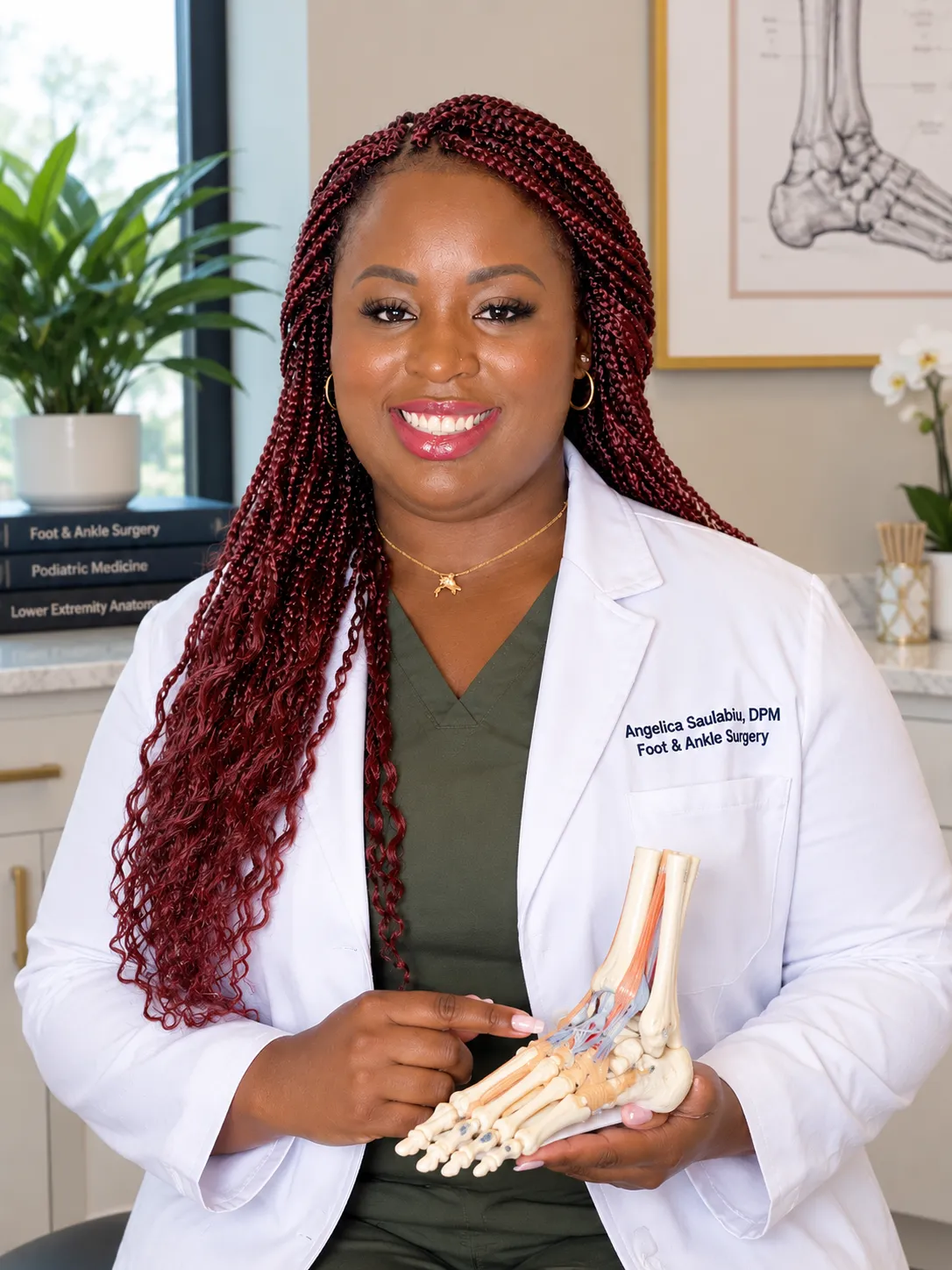
Care From Dr. Angelica Saulabiu, DPM
Dr. Saulabiu is a foot and ankle surgeon who takes time to explain what is going on and what your options are. Most visits include an exam, on-site X-rays when needed and a clear plan before you leave.
Frequently Asked Questions
When should I see a podiatrist for heel pain?
If heel pain lasts more than a few weeks or gets in the way of daily activities, it is time for an evaluation. See us sooner if you have diabetes or the pain followed an injury.
Is a heel spur the same as plantar fasciitis?
Not exactly. A heel spur is a bony growth that can show up on X-ray, and it often appears alongside plantar fasciitis, but the fascia is usually the source of pain.
Is heel pain treatment covered by insurance?
Many plans cover podiatric evaluation and treatment. We accept most major plans and offer self-pay pricing with flexible payment for uninsured patients.
Related Care
Plantar Fasciitis
The most common cause of pain under the heel, especially with your first steps.
Learn MoreAchilles Tendinitis
Pain and stiffness at the back of the heel from an irritated Achilles tendon.
Learn MoreX-rays
X-rays in our office, so you get answers during your visit.
Learn MoreCustom Orthotics
Shoe inserts made for your feet to ease heel, arch and ball-of-foot pain.
Learn More